Parts of the US recorded rainfall well above seasonal norms in August, with some areas receiving as much as 125% above average, including Nebraska, which accounts for about 10% of the nation’s corn production.
According to the Expana Global Weather Report – August 2025, (customer access only) the heavy rains raise the risk of harvest delays and potential declines in grain quality due to increased disease pressure. However, earlier-season favorable conditions helped the corn crop, setting the stage for a bumper harvest beginning in September.
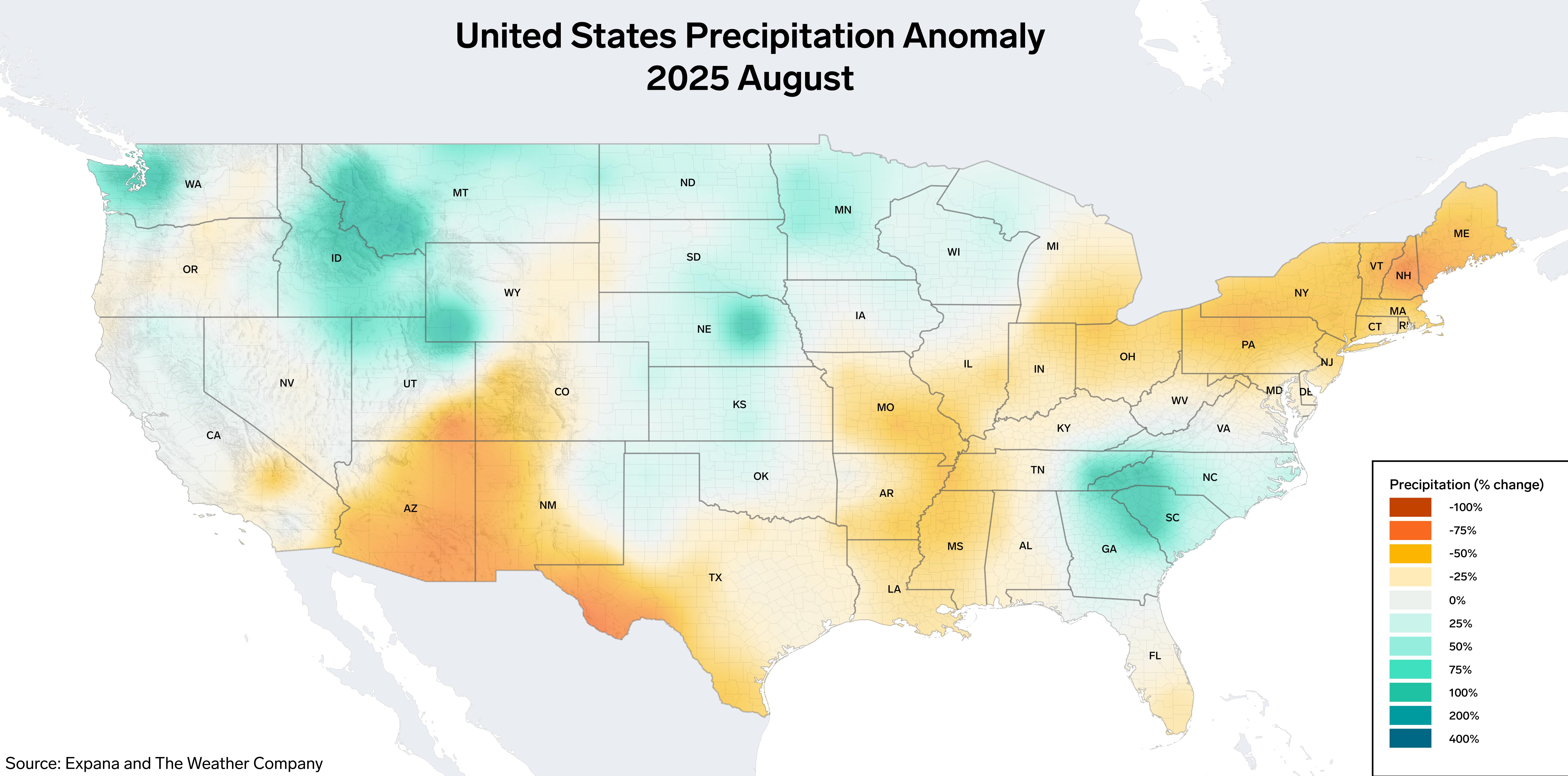
Figure 1. United States’ 2025 August precipitation percentage change compared to the 30-year average.
“Market players told Expana that concerns regarding Southern rust (corn fungal disease) could be further heightened as heavy rainfall can promote infection by keeping leaves wet. Sources added that rainfall could impact yields during harvesting due to delays and higher grain moisture,” said Ben Barritt, Grains Market Reporter, Expana.
In its latest World Agricultural Supply and Demand Estimates report published September 12, the US Department of Agriculture (USDA) said that it forecasts 16.81 billion bushels of corn to be produced by farmers in the 2025-26 marketing year-which began at the start of the month. The projection is up from 16.74 billion bushels forecast last month and remains well above the 2023 record high of 15.34 billion bushels. The USDA projection is supported by a roughly two-million-acre expansion in corn cultivation area and an anticipated yield that would be about 7% above the five-year average.
The positive outlook underpins expectations that global exports could stay on track despite localized weather stress. However, Expana remains more cautious than the USDA regarding the US corn crop with estimates closer to 16.47 billion bushels, said Benoît Fayaud, Senior Manager – Grains & Crop Analysis, Expana.
However, the Expana Global Weather Report – August 2025 shows that Montana, the main lentil-producing state and responsible for about 38% of US production, faced nearly three times its normal rainfall. The saturation during maturation heightens the risk of lentil podding failures and can foster fungal disease, potentially curbing yields.
Meanwhile, raspberry and wine grape regions in Washington also saw rainfall levels triple, a development that could affect fruit quality and delay harvests. While those crops are concentrated in multiple states, industry observers say the national supply is unlikely to be significantly disrupted, given broader regional production and processing capacity.
Co-authored by:
Simon Duke, Managing Editor – EMEA; Benoît Fayaud, Senior Manager – Grains & Crop Analysis; Ben Barritt, Grains Market Reporter
Expana
Written by Demelza Knight