
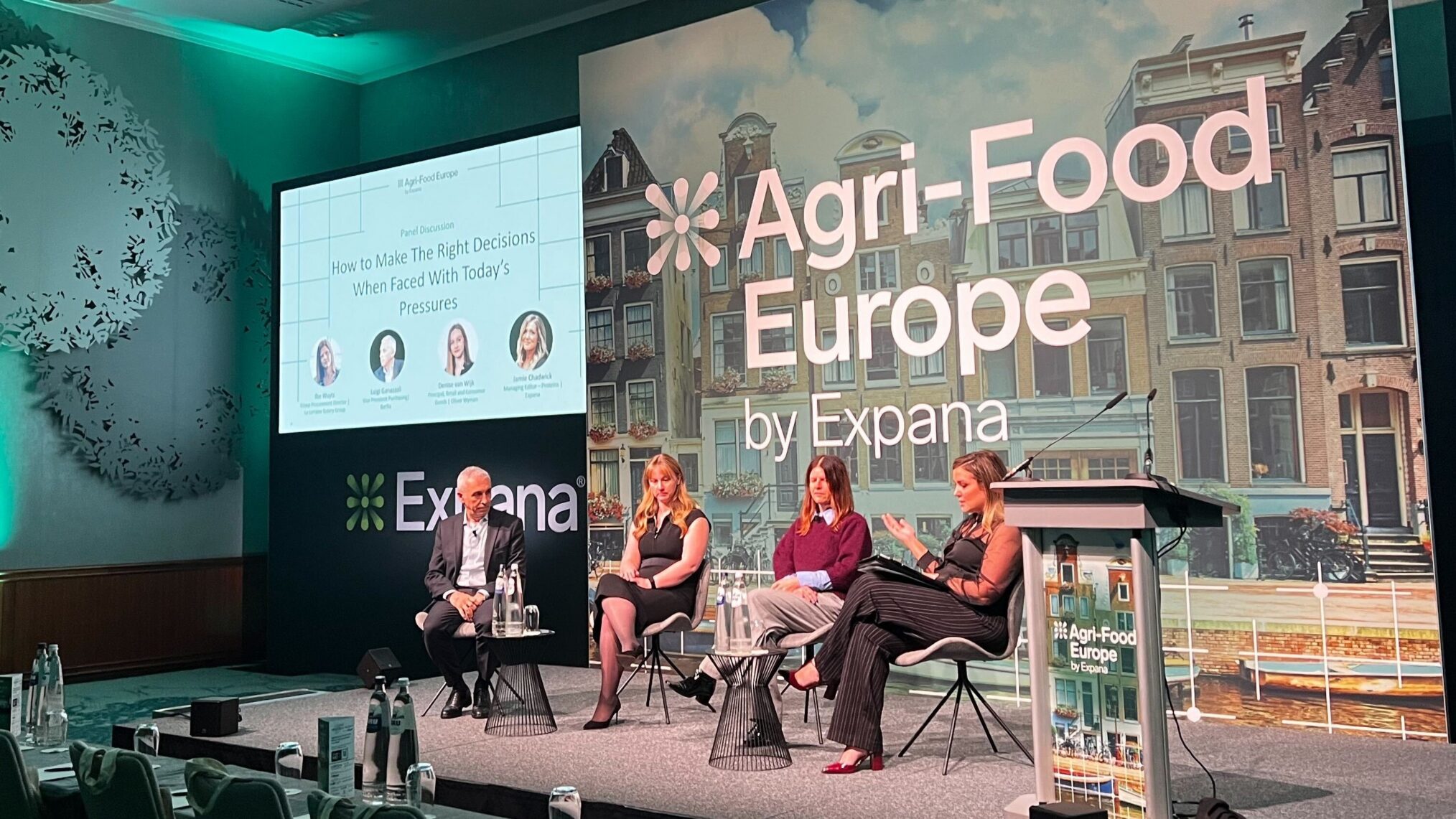
Risk, not cost, should sit at the core of procurement decisions in the food industry, according to leaders speaking at Expana’s Agri-Food Europe 2026 event in Amsterdam.
“We look at the combined value, and things like resilience; risk is always at the core of the decision,” said Denise van Wijk, principal in retail and consumer goods at Oliver Wyman, during a panel on procurement strategy.
The critical first step
Identifying which commodities would most severely disrupt operations if sourcing failed represents a critical first step, explains Ilse Wuyts of La Lorraine Bakery Group. Companies must then involve key suppliers in plans to reduce that vulnerability. Van Wijk emphasized that maintaining “feet on the ground” at key origin points for critical commodities remains essential to staying resilient.
Technology increasingly plays a role in this assessment. Luigi Ganazzoli of Barilla recently invested in a tool that consolidates multiple risk factors including labor conditions, environmental factors, location, and costs into actionable profiles. Artificial intelligence helps process the volume of data available, says Ganazzoli, though van Wijk cautioned that success depends on tailoring tools to a company’s specific needs rather than simply investing in the latest technology.
Shifting supplier relationships also proves important. Working with a limited number of strategic suppliers through shared values solves more problems than contracts alone, explains Wuyts, though maintaining redundancies across the supplier base remains critical to avoid disruption. Aligned priorities with suppliers matter most when navigating periods of volatility, both Ganazzoli and van Wijk said.
Written by Thess Mostoles