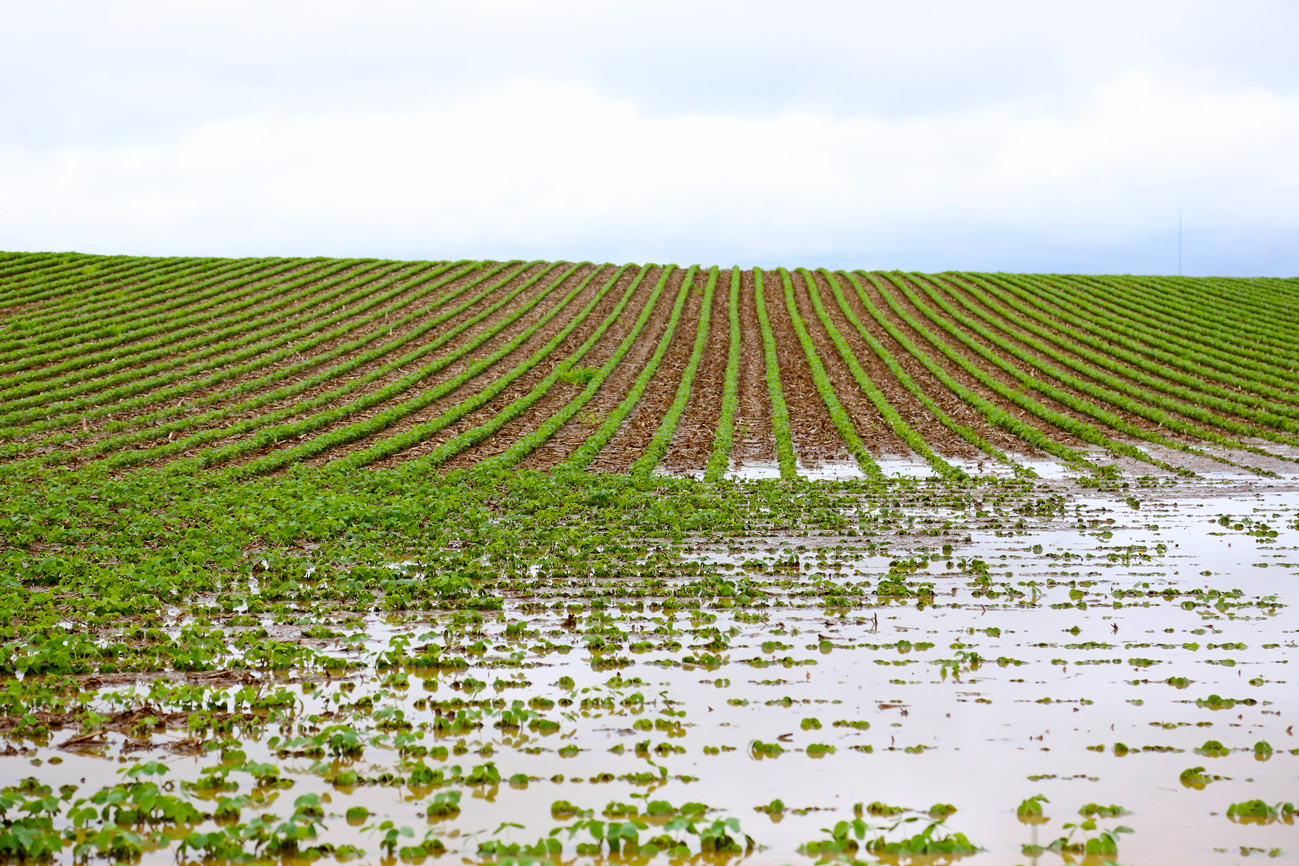
In January 2026, rain and windstorms battered parts of Europe, according to the Expana Global Weather Report – January 2026, with the Spanish meteorological agency AEMET registering the highest rainfall since 2001.
Much of these weather conditions carried on into February. As of February 12, the Union of Farmers and Livestock Breeders of Andalusia, (COAG) is lobbying for government support after the succession of storms, according to the Spanish organization lead by an olive and almond grower from the Jaén region, General Secretary Juan Luis Ávila Castro.
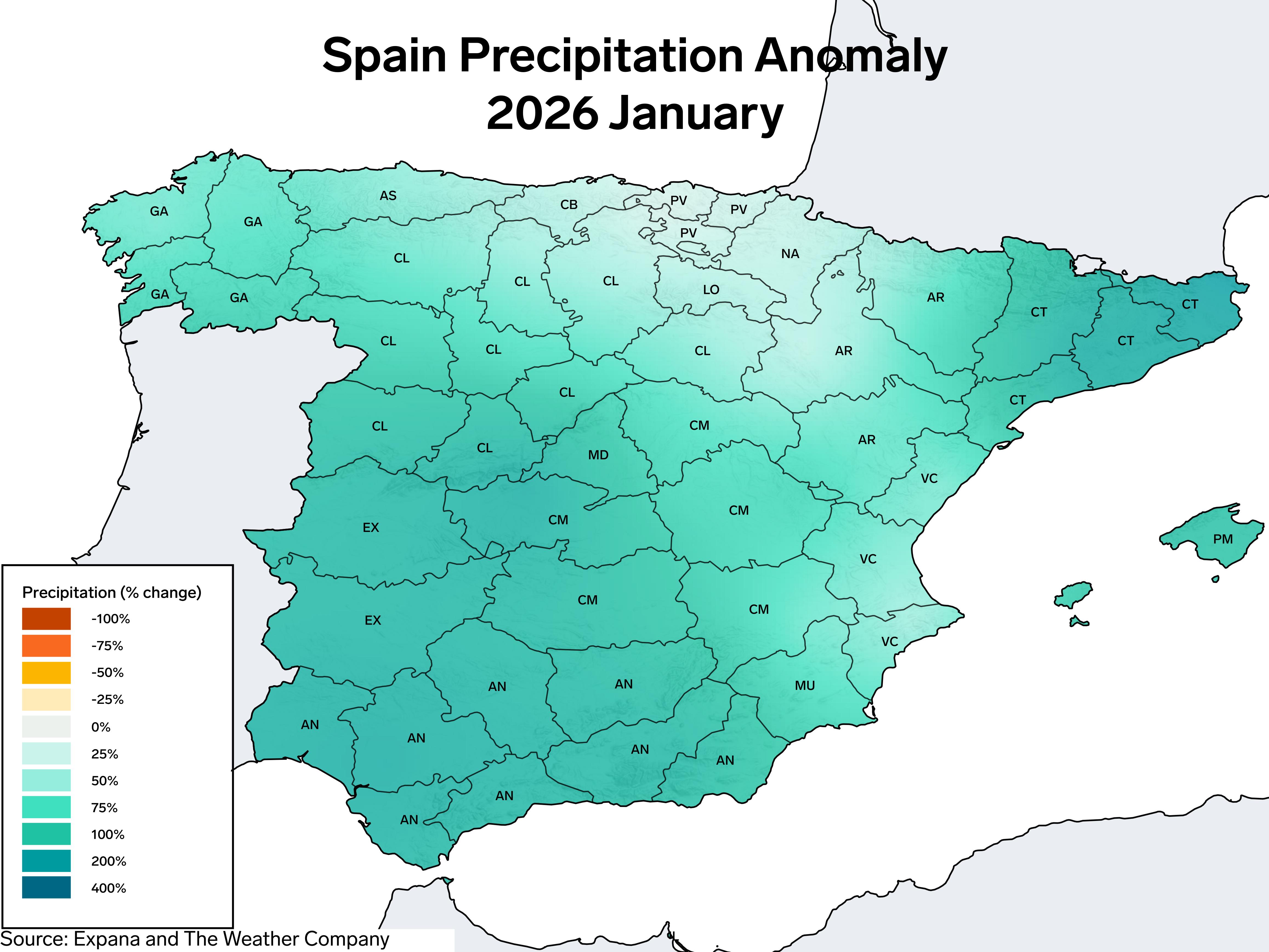
Figure 1. Spain’s 2026 January precipitation percentage change compared to the 30-year average.
“Following the relentless succession of storms, the viability of thousands of farms is being jeopardized, as they have no time to recover between weather events. Thus, more than 20% of agricultural production is already considered lost (according to the Andalusian Regional Government), a figure that is expected to skyrocket once the current data collection is completed early next week,” COAG said.
As of February 10, “the damage to [Portuguese] agriculture has been substantial, affecting both crops and infrastructure: Devastated forests, uprooted fruit and olive trees, destroyed greenhouses, flattened vineyards, flooded vegetable fields and pastures, severely damaged walls, animal shelters, and warehouses,” according to a community organization called La Via Campesina whose officials estimated that farmers will suffer significant income losses in the coming months, and even years.
On February 4, the Portuguese government provided an overall 40-million-euro assistance, as a non-refundable grant, to restore the production in the farms hit by storm Kristin, according to a government news release.
Highest rainfall recorded in Spain in a quarter of a century
In January 2026, Southern Spain received 90-150% more rainfall than usual, according to Expana’s Global Weather News report (customer access only). Heavy rains could delay fieldwork, promote fungal disease, cause blemishes and rotting, and reduce crop yield. Spain, a top strawberry exporter, could feel that market tighten if excess rainfall continues.
The Spanish meteorological agency AEMET said this week January recorded the highest rainfall in the country in a quarter of a century, around 185% of the normal, and only behind 2001.
“These past few weeks there have been anticyclonic blockings over Greenland or the Scandinavian Peninsula, which have diverted the low-pressure systems to the south. To this we must add that the Azores High is positioned farther south,” the AEMET said.
There are already reports of this weather impacting Spain’s vegetable and fruit crops. In Murcia, limited supply of open ground crops including artichokes, broccoli, cauliflower, lettuce, and spinach was reported due to persistent rains. Stocks are sufficient for regular customers, but spot market supply is low.
In Huelva, extreme winds and rainy conditions damaged numerous strawberry greenhouses. Oversaturation can cause rotting, and growers expect reduced quality. January’s weather limited flowering, fruit set, and delayed fruit development. In the last week of January 2026, marketed strawberry volumes were 50% lower than last year.
“Several key producers in the region have been dealing heavy rains and even flooding in some areas. Storm conditions in December created logistical disruptions for Morocco, and in Spain torrential rain has left crops submerged, according to reports,” explained Craig Elliot, Market Reporter at Expana.
“Both countries are major producers of tomatoes, and prices for some varieties out of Spain are elevated in YOY terms. Although the extent of the damage is yet to be determined, farmers in Spain have reported crop damage worth millions of euros across the country,” he added.
Other Regions Affected Too
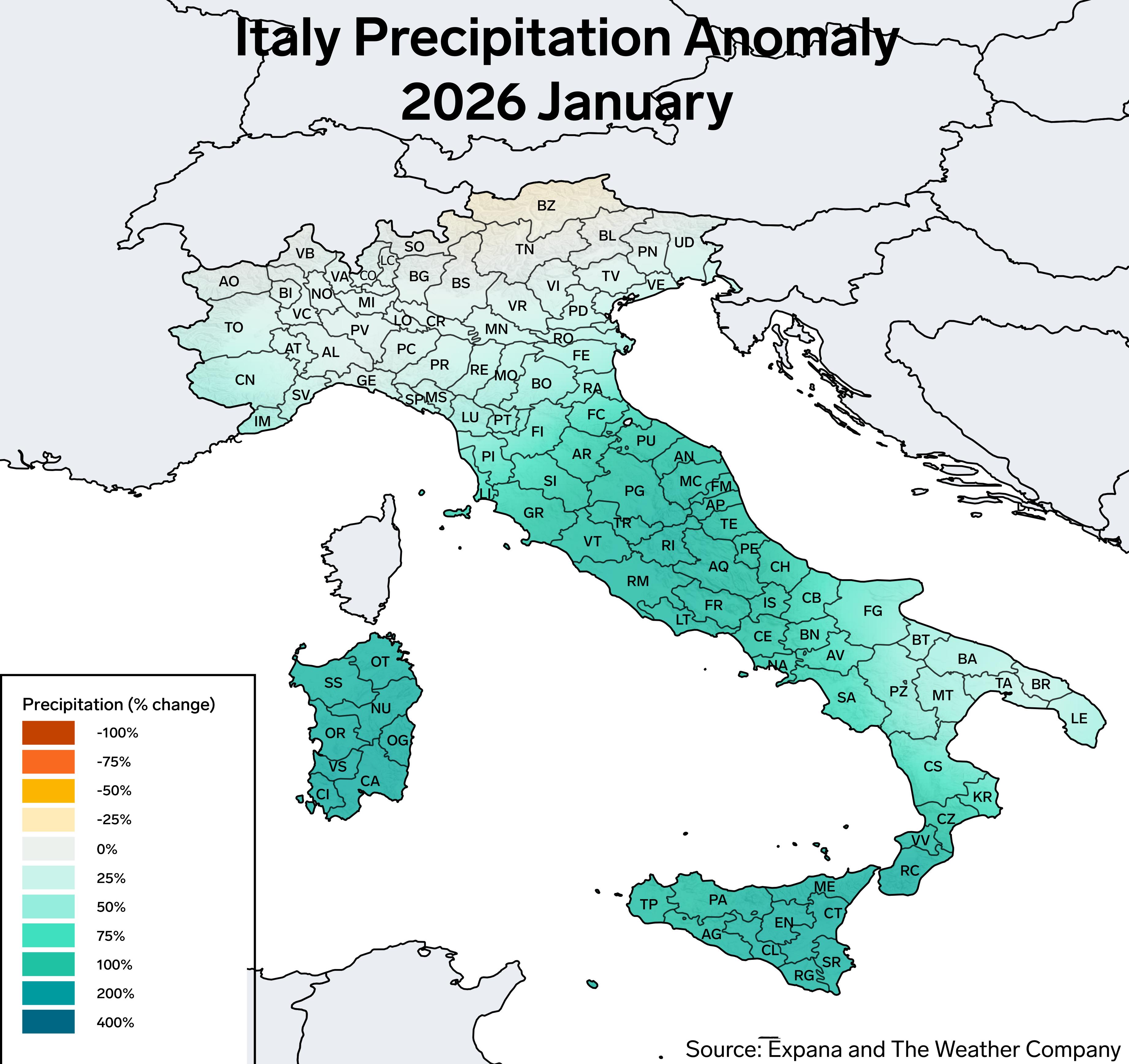
Figure 2. Italy’s 2026 January precipitation percentage change compared to the 30-year average.
In Italy, parts of the country received 150% more rainfall than average in January. Artichokes in Sardinia were weakened by excess water. Heavy rainfall can flood fields which cause rotting and disease. Botrytis and downy mildew spread, which reduced production and quality. Plus, January frosts damaged spinach crops and suspended harvesting. As of Expana’s January weather report, Italian spinach supply was down 80%.
Just like in the case of Spain, Italy is a major exporter of these vegetables, and damages may tighten global export supply.
Regions like Italy, Portugal, Spain, and across Europe experienced especially wet weather and strong winds in the beginning of 2026. Plus, infrastructure used by businesses and locals alike had been affected, worsening the outcomes as the poor conditions persisted in January into February.
This winter season has been tough for European farmers, as well as those on the US East Coast too—where below freezing temperatures were felt in January and February 2026.
Co-authored by:
Ryan Gallagher, Editor
Thess Mostoles, Editor
Craig Elliot, Market Reporter
Image source: Getty
Written by Demelza Knight