Following Brazil’s submission of detailed epidemiological data, the European Commission (EC) stated that the information was sufficient to confirm the country’s disease-free status. As a result, the EC, in coordination with EU Member States, will begin lifting bans and progressively reinstate access for all previously authorized export regions.
Trade data highlights the importance of this decision for both sides. Between January and June 2025, the EU imported 125,300 tons of chicken meat from Brazil, up by 20.8% year-on-year (YOY), valued at USD 386.3 million, according to the Brazilian Association of Animal Protein (ABPA). While the EU accounts for only around 4.4% of Brazil’s total poultry exports (5 million tons in 2024), Brazil remains the EU’s largest external supplier, representing 32% of total poultry imports last year. Brazilian chicken, known for its competitive pricing and value-added cuts, plays a particularly important role in balancing EU supply, especially in the foodservice sector.
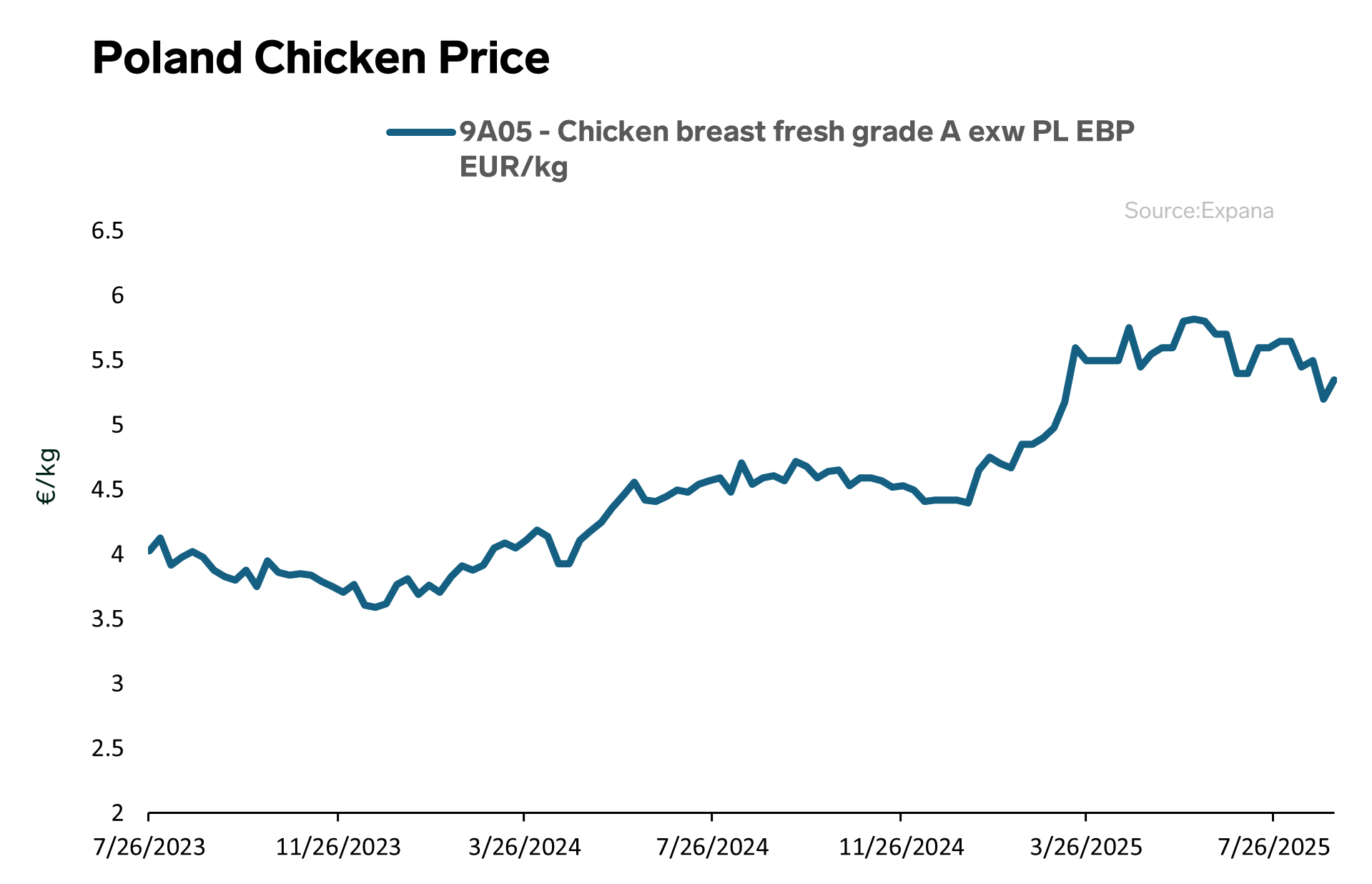
The temporary ban on Brazilian exports exacerbated supply shortages within the EU, contributing to a sharp increase in prices. With imports now resuming, market sources expect additional supply from Brazil to place downward pressure on
For Brazil, the lifting of restrictions represents a critical step toward recovery. The ban had weighed heavily on the poultry sector, with exports curtailed at a time of strong global demand. While China, one of Brazil’s top buyers, has maintained its AI-related ban, other major destinations have already moved to reopen their markets. The EU’s decision, therefore, not only restores access to a key trade partner but also strengthens Brazil’s credibility in disease management, potentially accelerating the normalization of exports to other.
Written by Rutika Ghodekar