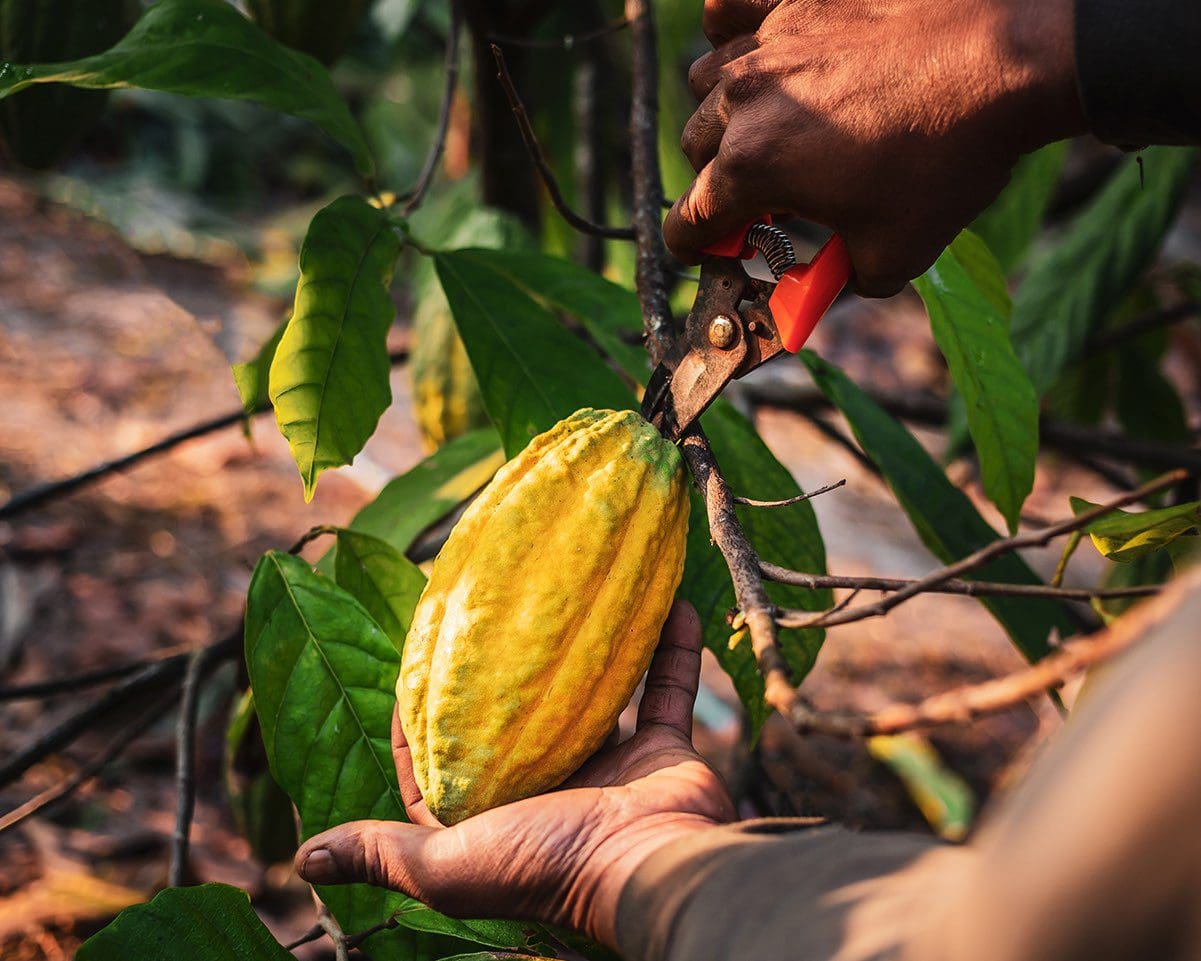
As of October 22, rains have improved in Ghana and so has soil moisture, according to Expana’s crop survey report. However, the pod setting is still below average and did not change from Expana’s previous survey in September. So, Ghana’s 2025/26 cocoa crop production should be significantly lower than what’s been projected by the Ghanian ag minister, according to Expana’s fundamentals team.
The minister’s projections run counter to those from Expana’s Tropical Research Services (TRS) team who are projecting Ecuador to produce more cocoa than Ghana during the 2025/26 harvest season. If this forecast is realized, Ecuador would become the world’s second largest producer of cocoa, and Ghana would fall to third.
Expana’s forecasters remain an unbiased, third-party data and analysis group who differ from government officials, for example, where the numbers in the Reuters article are sourced.
As of October 3, Ghanian government leaders increased the producer price of cocoa to GHS3,625 per bag or GHS58,000 per metric ton, according to a news release in an attempt to get closer to the futures price of cocoa in New York or London.
Last week, cocoa markets reflected results from demand‑driven reports, with Q3 grind data showing divergent regional trends. European grindings were down around 4.8% year over year, North American grindings rose about 3.2%, and Asian activity fell roughly 17% (customer access only) Ivory Coast grind data were weak, with GEPEX reporting a 38.6% year‑on‑year drop in September, reinforcing the fragile demand backdrop even as West Africa’s main crop begins.
“This week, however, nearby prices have risen by over 8% following the announcement that EUDR rules are likely to still go into place at the end of this year, with new exceptions and derogations granted,” according to Moriarty. “The industry consensus is that the implementation of EUDR is likely to partially restrict the total volume of beans available and slightly alter global trade flows, leading to the upward price moves.”
Rule of thumb: Expana uses “estimate” when talking about something which has already happened but has not been finalized—like a crop estimate from the 2024/25 season. On the other hand, Expana uses “forecast” when talking about something that has not happened yet—like the current season’s crop forecasts.
Written by Ryan Gallagher