Above-average rainfall across Colombia’s main coffee-producing regions in September has raised the risk of disease and damage to blossoms, potentially reducing yields for the 2026 second harvest and tightening global supplies of arabica, the Expana Global Weather Report – September 2025 (customer access only) said.
The report warned that wet conditions could harm the quality of mature coffee cherries by increasing fungal and bacterial disease pressure and could damage coffee blooms that form the basis of the 2026 second harvest. Both effects could add to supply risks for Colombia’s 2025/26 coffee season if heavy rains persist in the coming months.
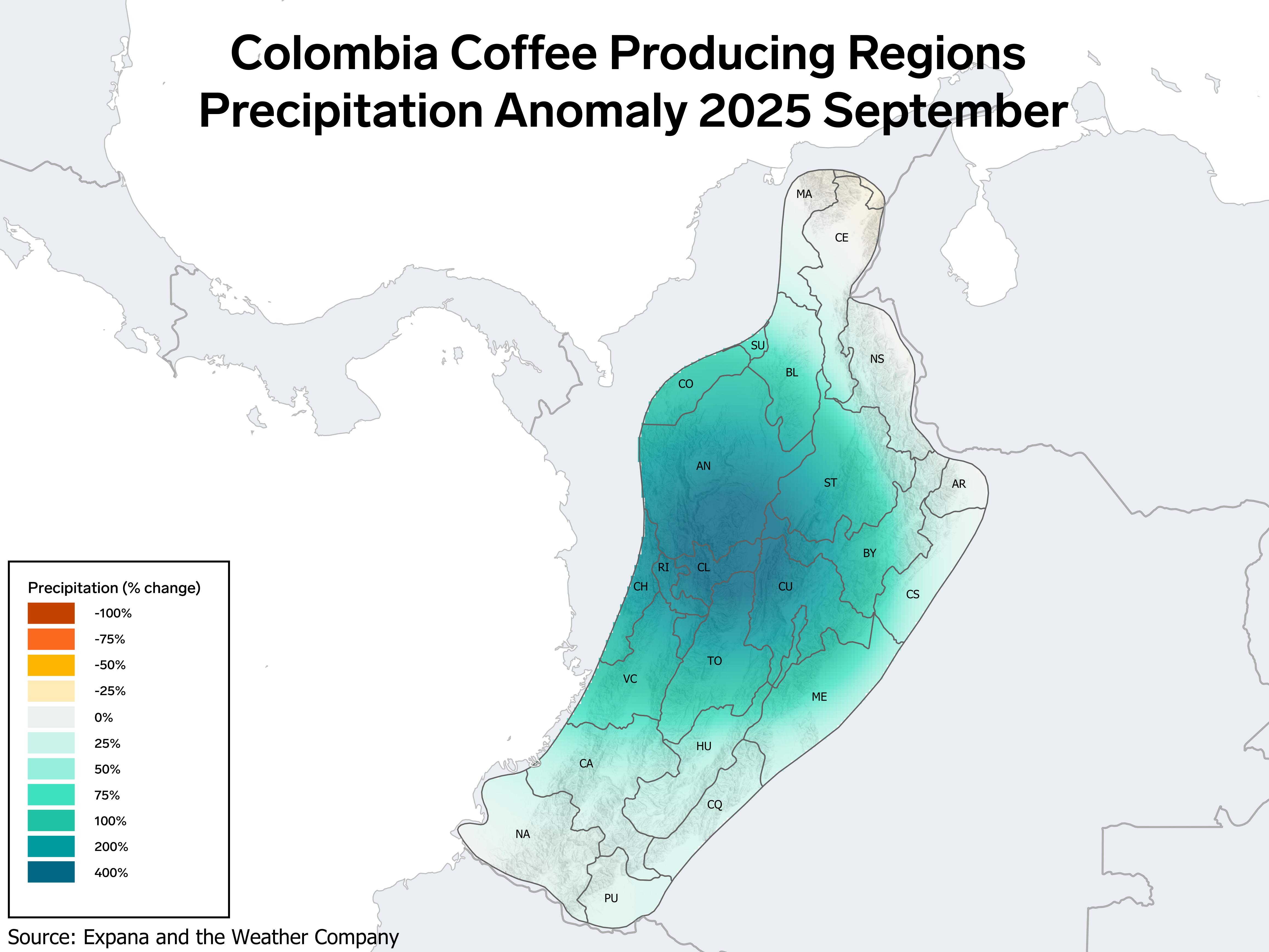
Figure 1. 2025 September precipitation percentage change compared to the 30-year average in Colombia’s primary coffee-producing regions
Colombia, the world’s third-largest coffee exporter and a producer of mainly arabica beans, accounts for roughly 10% of global coffee exports. The country has already faced production challenges this year after excessive rainfall earlier in 2025 hampered flowering and cherry development for the crop currently being harvested.
Traders and roasters monitor disease outbreaks closely because affected cherries can lower cup quality and increase sorting and processing costs. Farmers and exporters could face higher post-harvest losses and a heavier burden on drying infrastructure if rains continue through the key flowering and fruit-set windows.
A US Department of Agriculture (USDA) report in May forecast a 5.3% decline in Colombia’s 2025/26 coffee production compared with 2024/25. September’s wetter conditions could deepen concerns about volumes and quality.
Image source: Adobe