


Key Takeaways
-
Atlantic salmon harvests rose strongly YTD, though growth may slow in H2 as producers manage El Niño risk.
-
Exports increased 16.9% YTD, with China demand surging nearly 76% and the US absorbing 41.1% of shipments.
-
Tariff realignment, rising fuel and feed costs, and mounting El Niño risk are converging to keep the pricing floor elevated even as demand signals stay mixed.
Harvest and Export Trends
According to SUBPESCA, accumulated Chilean Atlantic salmon harvest volumes from January to August were 15.4% higher YTD at 523,474 metric tons (mt) (Figure 1). August harvest reached 78,588 mt, up 14.7% month over month (MOM) but down 5.4% year over year (YOY). Market participants doubt this pace continues through Q3 and Q4: lower YOY live biomass in sea cages reflects precautionary destocking tied to El Niño risk, detailed below.
Exports through July totaled 242,217 mt, with fresh salmon accounting for 84.0% of shipments. Accumulated exports rose 16.9% year to date (YTD), led by the United States (41.1%), Brazil (31.8%), and China (6.8% of volume but up 75.9% YTD). The US picture has been reshaped by the Section 301 forced-labor tariff, with Chilean product gaining US share even as its own tariff burden rises — also explored below. Norwegian Atlantic salmon exports to the US, by contrast, were down 22.3% through June.
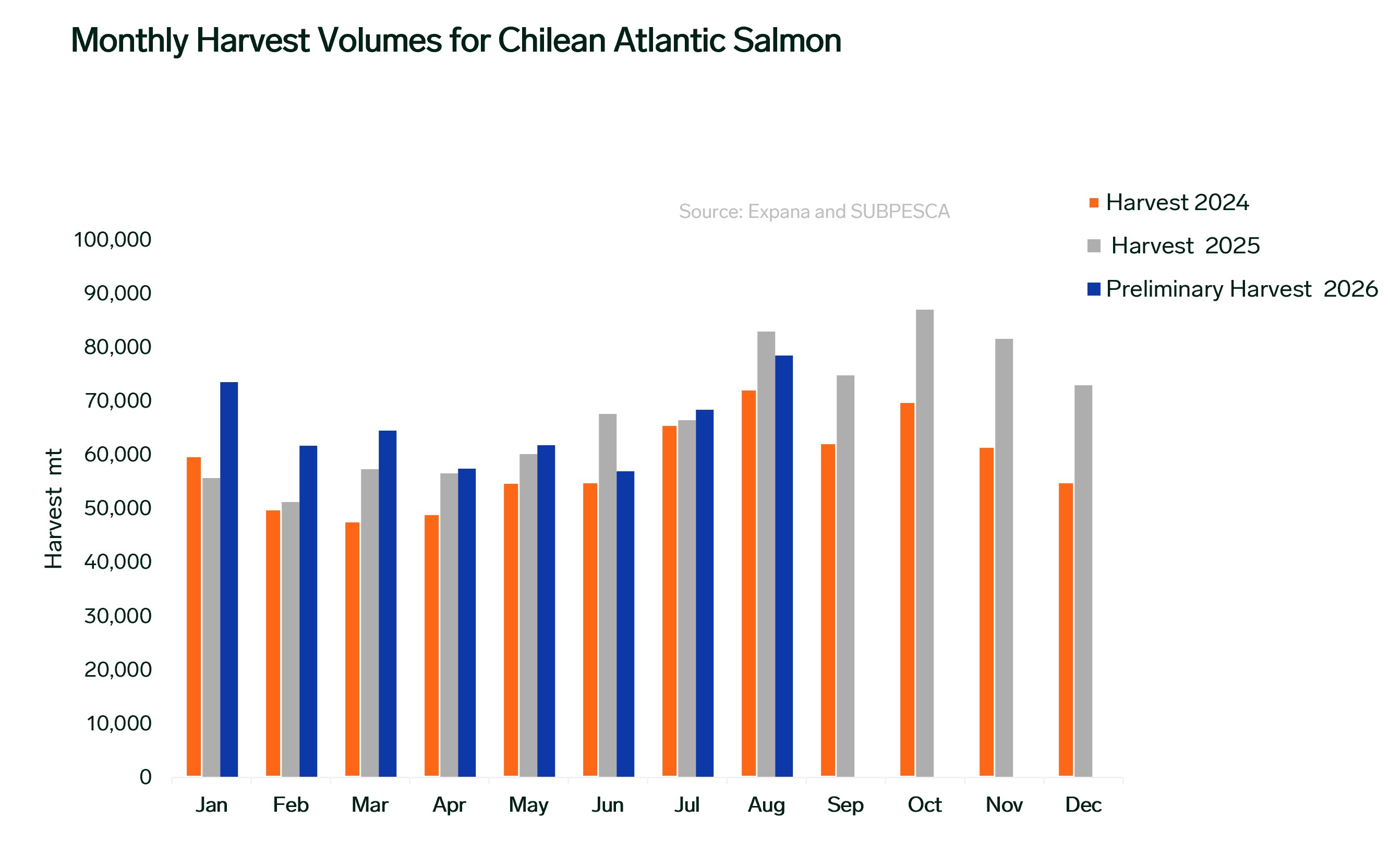
Figure 1: Monthly Chilean Atlantic Salmon harvest in metric tons (mt). Source: Expana and SUBPESCA.
Price Dynamics in September
Chilean salmon prices in September 2026 showed firm undertones amid mixed demand and constrained supply. Whole fish prices edged higher, supported by tighter availability from Norway and Canada in larger sizes. Fresh fillets stayed unsettled, with highly variable pricing reflecting inconsistent spot availability. Golden Week demand from China pulled supply away from North American markets, and while end-of-month dynamics suggested firmer buyer engagement, the intra-month pattern reflected ongoing volatility between supply constraints and caution across both whole and fillet segments.
Confluence of Factors: What’s Really Holding the Floor Up
Beneath the month-to-month noise, several structural pressures are converging — and it’s their cumulative effect, not any single driver, that market participants say is keeping the pricing floor elevated.
Tariffs and trade realignment
The restructured Section 301 forced-labor framework took effect July 24, 2026, imposing tariffs of 10–12.5% across 60 economies. This brings Chile’s and Norway’s effective US tariff burden to 12.5% apiece — putting the two dominant suppliers at parity, while Canadian salmon still enters duty-free under USMCA. Late-August trade talks between Chile and the US ended without resolution, and the tariff remains fully in effect. The practical effect has been a redirection of volumes: with China, Brazil, and Russia offering more competitive net returns at various points this year, less unsold Chilean fish is reaching US distribution channels, letting sellers hold firmer asking prices even as the US import environment tightens. Norway is absorbing a comparable hit, with fresh and frozen fillet exports to the US down sharply YTD.
Fuel and logistics costs
Middle East tensions — including renewed Iran-US missile exchanges and a near-total closure of the Strait of Hormuz — have kept crude oil, bunker fuel, diesel, and jet fuel prices elevated and volatile through August and into September. Fresh Chilean salmon depends heavily on airfreight, so elevated jet fuel costs feed directly into landed cost, while trucking costs have moved the same way, compressing margins for receivers and distributors.
Aquafeed cost inflation
Feed costs have risen meaningfully, with the Atlantic Salmon Americas and Europe Feed Cost Indices both up on a quarter over quarter (QOQ) and YOY basis, driven by higher fish oil, fish meal, and rapeseed oil prices. Peru’s North-Central anchovy season — the primary source of global fish meal and oil — closed early in June after catching only a fraction of an already decade-low quota, following IMARPE’s assessment of elevated juvenile fish incidence and deteriorating conditions. That has tightened marine ingredient supply just as Chilean catches have softened for similar reasons. Higher feed costs are limiting the pricing flexibility exporters might otherwise offer during softer demand windows, reinforcing the market’s floor from the supply side.
El Niño and biological risk management
Tying these threads together is the ENSO outlook: NOAA and other agencies project a better-than-even chance El Niño reaches very strong intensity in the southern hemisphere spring-summer, with some models suggesting Q4 could register the strongest event since 2023. Chile’s Instituto de Fomento Pesquero warns that rising sea temperatures and weakened coastal upwelling favor harmful algal blooms in Los Lagos, Aysén, and Magallanes — capable of triggering mass mortality via gill damage or oxygen depletion. Sernapesca has responded with mass-mortality simulation drills alongside SalmonChile, Intesal, and the Consejo del Salmón, and tighter transport and inspection protocols. This is the same risk behind the Q3/Q4 biomass destocking noted earlier — El Niño is squeezing both the supply side (biomass management, HAB risk) and the cost side (marine ingredient shortfall), arguably making it the single factor with the broadest reach.
Bottom Line
Tariff-driven trade reallocation, fuel-and-freight inflation, rising aquafeed costs, and mounting El Niño risk are reinforcing one another: each raises the cost or narrows the availability of Chilean supply reaching key markets, and none shows clear signs of reversing before year-end. Market participants are watching October–December ENSO readings and the Chile-US tariff roadmap most closely, as either could shift the supply-cost calculus heading into 2027.
Image source: Shutterstock
Written by Janice Schreiber, Josh Bickert and Boris Ampuero