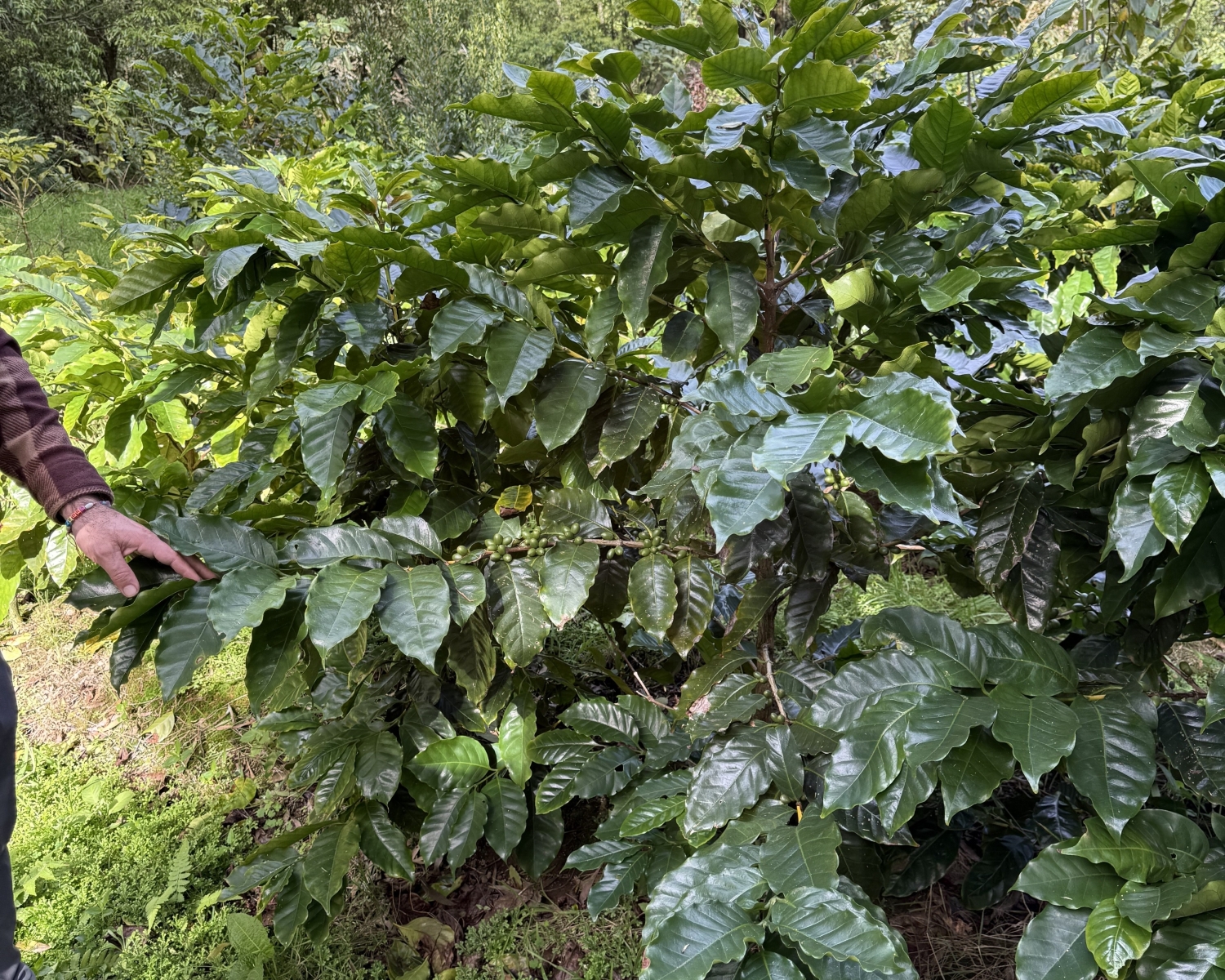
After starting a coffee farm in 2022, some of the latest experimental coffee seedlings at Pete’s Volcanic Coffee on the Azorean Island of Sao Miguel are called “Impossible Coffee.” Grown as a side project in partnership with the Delta Coffee brand, the name comes from preconceived notions about coffee growth north of major producing regions in Southeast Asia or Central and South America. In this case, sitting by a raucous river at the base of his lush coffee farmland situated on an island in the middle of the Atlantic Ocean, it was apparent that Pedro Pimental from Pete’s Volcanic Coffee knew something that most in the market do not.
“And this project is for the government… The idea is to make new varieties to see what will happen,” said Pimental pointing to seedlings separate from those he is helping to grow for Delta Coffee. “The coffee is normally 25° north, 25° south… You are at 37°—it’s impossible coffee. That’s the name, but it’s possible. The volcanic soil is good, but we are in a microclimate.”
The Azorean islands are an agricultural spectacle. For example, the island’s ranchers benefit from their cows having 365 days in the pasture. Even when the weather is bad, the fertile soil keeps producing. This is the scene that Pedro has chosen to start an all-arabica, organic coffee farm slowly growing full of red and yellow beans.
“Coffee liqueur?” Pedro gestured to a dark glass bottle and removed the cork. It was 11:15 a.m. in the Azores. “It’s time,” he said before sipping some of his homemade coffee spirit.
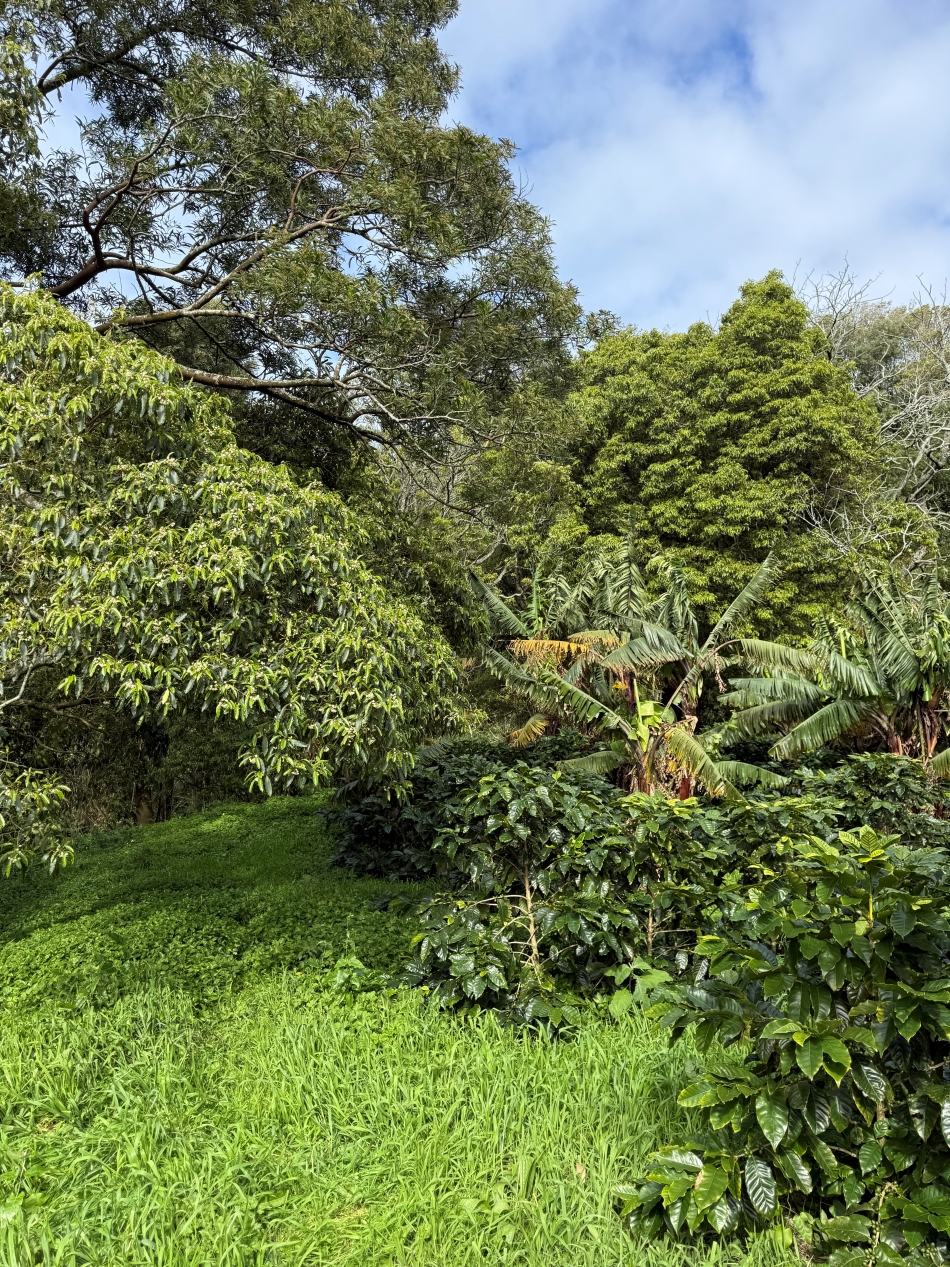
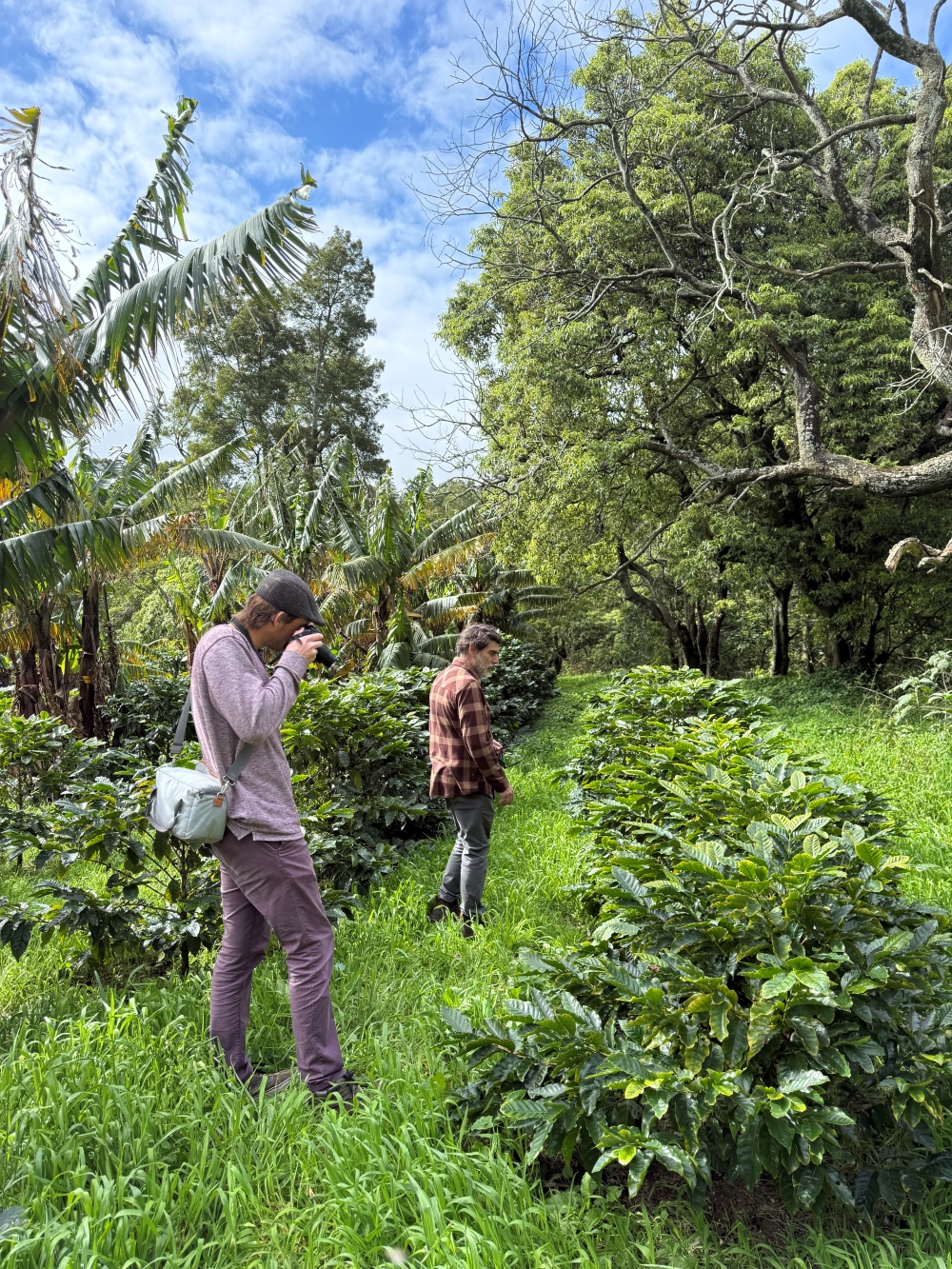
In addition to his contract work for Delta Coffee and government funded work, Pimental’s farm is home to about 5,000 “Pete’s Volcanic” coffee plants, banana trees, pine trees, tamarillo (a cross between tomatoes and passion fruit), and more. These plants are part of his agroforestry farm plan to protect his coffee, and to offer his guests a sweet snack. He also keeps bees which he hopes will yield a special coffee-flavored honey.
“The tamarillo goes good with gin,” said Pedro as he displayed how the fruit is eaten. “It changes the gin color to red, and the flavor is nice.”
For now, Pedro’s coffee tours are simply a walk in the coffee farm, a nice conversation over coffee liqueur, and a small sample of home-roasted Azorean arabica beans.
.jpg)
He does not have much coffee for sale now after losing 4,000 trees in the first year of operation, battling consistent rain and wind—factors that go together when operating in the middle of the Atlantic.
For now, coffee sales aren’t the main priority. But when Pedro does sell the coffee, it commands a higher price due to its novelty and quality: 250 grams (about eight ounces or half a pound) for €25 (~$29). Pedro specified that his prices are subject to change in the future.
In contrast, the global price for arabica coffee on NY ICE last closed at 287.55 USc/LB, according to the Expana platform which shows a downward spiral of ~31% in the last year.
There’s no question: Pedro’s coffee can’t compete with the largest global producers in Brazil or Vietnam—in volume nor in price. However, Pedro hopes to set up his family with a sustainable business—catering to locals and tourists.
In the future, Pedro hopes to vertically integrate his farm into a coffee shop, gin and liqueur bar, and to build rental properties on his land, while also selling green coffee to roasters. He is hoping for his next harvest to yield 25-35 kilograms (~55-77 pounds) of green coffee which he may sell to a roaster in Sao Miguel.
Until then, Pedro also operates Pete’s Volcanic Strawberry Farm “for cash flow.”
The COVID-era passion project began after Pedro ended a 12-year stint as an agronomist working on seeds, chemicals, and irrigation in Angola and Mozambique. He moved from his home near Lisbon, Portugal to this island chain called the Azores where he bought roughly three hectares of land and started planting coffee.
“When I was young, many friends—their fathers and mothers—had coffee plants in their garden… You can make a half kilo of coffee for the house like this. So, during the pandemic, I finished my work in Africa. I have a daughter and said ‘That’s enough of Africa. I’m 49 years old. What can I do now?’ One day I said to my wife, ‘Let’s do coffee,’ because I know that coffee grows here. So, I started this farm. I bought this land. I sold my house in Lisbon, and I bought another house here… Let’s go. It’s not easy, it’s tough. I moved to Sao Miguel in 2022 and planted the trees in August 2022… The first flower came in 2024. The first harvest was in 2025, and now is the second. I planted 9,000 plants and now it’s just 5,000. I lost about half at first. For me, this year and 2025, this is nice after the loss.”
Azorean Tea Too
The island of Sao Miguel is home to Gorreana Tea Factory. As of February 2026, the 32-hectare tea plantation had been cut down after the last harvest.
While the coffee history on the Azores is much newer, the Gorreana team has been growing and selling tea since 1883. As a result, the tea is a staple item in the homes of island locals who might buy 80 grams for €5.50.
“Without using any herbicides, pesticides, fungicides, dyes or preservatives, Gorreana tea is truly 100% organic, since the pests that normally exist in tea plantations do not survive in the island’s climate, therefore Gorreana don’t need to use any chemicals whatsoever in its plantations,” according to a Gorreana blog.
It was a pleasure meet Pedro, to tour his coffee farm, and to later enjoy the Azorean coffee. The stop at Pete’s Volcanic Coffee only inspired a greater interest in the Azorean Islands as well as hope to return.
Written by Ryan Gallagher