

Senior procurement leaders from a leading nutrition brand and a global confectionery giant recently gathered to explore how cost modeling is changing what procurement can deliver. These are the five levers that came out of that conversation.
Key Takeaways
- Most procurement teams have commodity price data. Far fewer can translate it into what it means for the cost of a finished product — or show finance which input is driving a SKU cost change before the invoice arrives. Cost modeling closes that gap.
- A benchmark cost model means procurement arrives at supplier negotiations with an independent view of what inputs have actually done in the market, not what the supplier says they have done.
- Negotiating pricing formulas and indexation clauses is more valuable than negotiating a single price. A category manager with a credible cost model can negotiate the mechanism that governs how prices move over time — reducing exposure to future increases before they happen.
- Cost modeling built into NPD means ingredient projections are live, not static. A reformulation decision made in month two reflects where inputs are heading over the next 18 months, not where they were last quarter.
- A category team that can show leadership which SKUs are under cost pressure before the numbers move is not reporting. It is contributing to financial planning. That changes how the function is perceived, what gets resourced, and who gets invited into decisions.
Most procurement teams have commodity price data. Fewer have a clear view of what that data means for the cost of a finished product. Fewer still can show finance exactly which input is driving a SKU cost increase, or where a market movement is creating an opportunity to reduce costs, before the invoice arrives.
Cost modeling closes that gap. Not as a finance exercise. As a procurement capability. And with AI now able to build a cost model from a single product description in minutes, the barrier to getting started has never been lower.
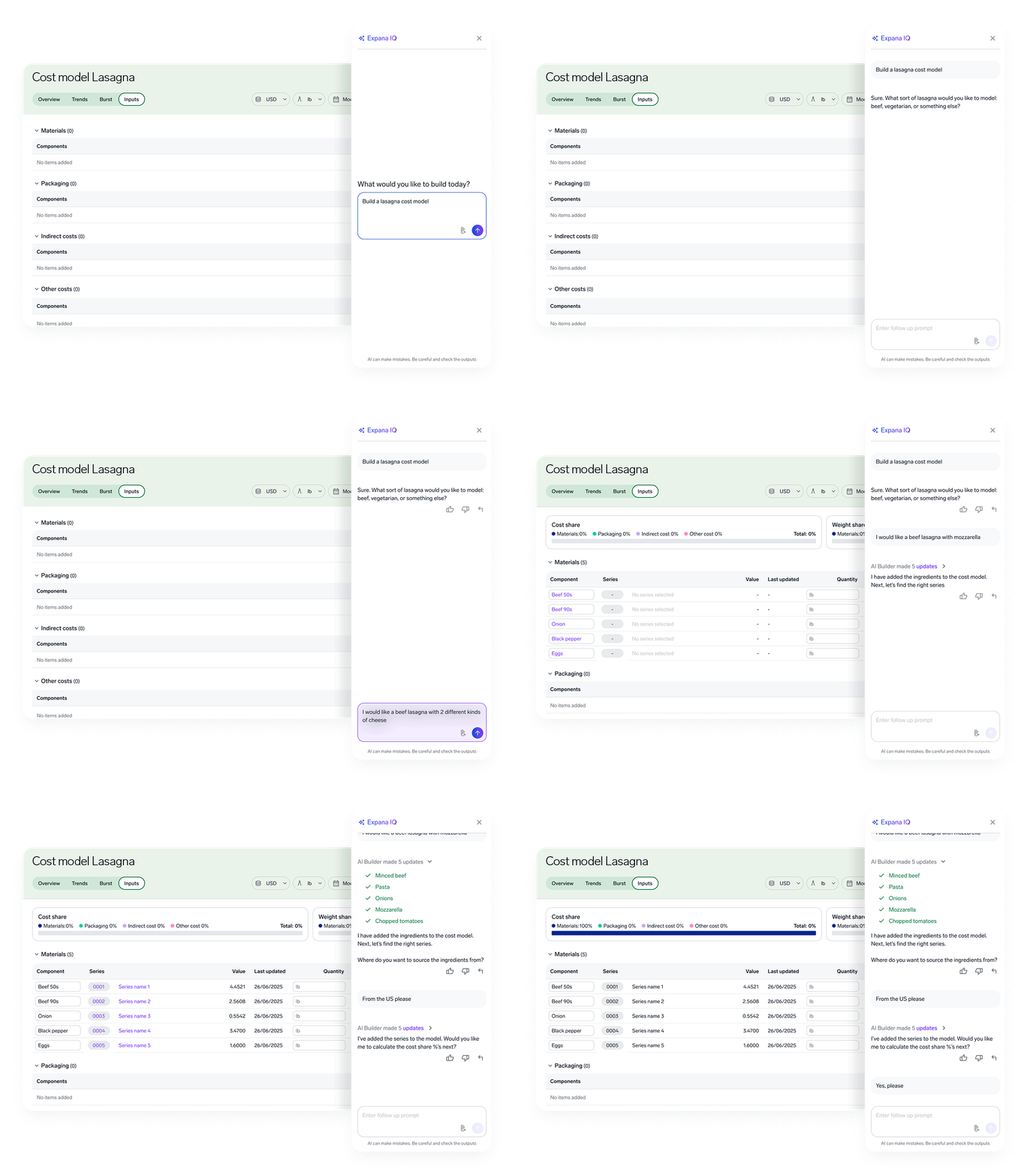
Expana IQ: AI-powered cost model builder. Describe your product, Expana maps the inputs across materials, packaging, indirect costs, and more.
1: Cost breakdown: make the invisible visible
The foundation of cost modeling is simple. Break a finished product into its component costs, raw materials, labour, overhead, transportation, packaging, and track each one independently.
That separation changes everything. When you can see which element is moving and why, the conversation with finance changes. The conversation with suppliers changes. The question shifts from ‘’what did this cost?’’ to ‘’what is this going to cost, and what can we do about it now?’’
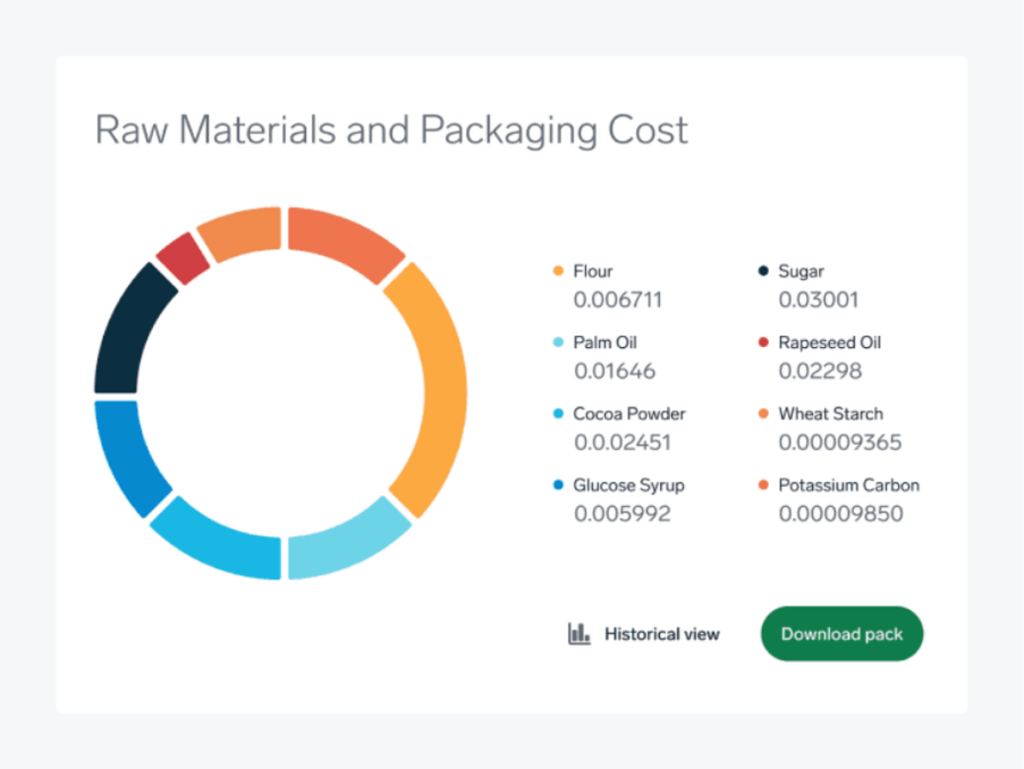 Expana Platform: Complete ingredient cost breakdown for a finished product SKU. Every component separated, quantified, and tracked independently.
2: Benchmark models: know where you stand before the supplier does
A benchmark model compares your cost structure against independent market standards. Not what your supplier says the market looks like. What the market actually looks like.
When a supplier presents a cost increase, you arrive with an independent view. The increase is validated or challenged on the basis of what the underlying inputs have actually done. That can strengthen the basis of the negotiation.
When Expana data shows cane sugar down more than 13% year-on-year, and a supplier claims input costs are rising, a benchmark model can help inform that conversation with independent market context.
‘’We have found it to be an invaluable part of our purchasing strategy, budgeting and supplier negotiations.” Expana customer, baked goods manufacturer’.
3: Supplier commercial mechanisms: negotiate the structure, not just the price
Pricing formulas, indexation clauses, cost-sharing structures, these are only as robust as the data underpinning them.
A category manager with a credible cost model does not just negotiate the price. They negotiate the mechanism that governs how prices move over time. That is a fundamentally different commercial conversation, and one that could reduce exposure to future cost increases before they happen.
When the cost model is connected to live market data and updated automatically through API integration, those mechanisms stay current without manual intervention. The data flows into the tools your teams already use.
4: NPD acceleration: price new products before the market prices them for you
New product development has always had a cost problem. Estimates made at conception are rarely accurate by the time a product reaches market. Ingredient prices move. Formulations change. The cost assumption baked into the business case becomes a liability.
Cost modeling built into the NPD process means ingredient cost projections are live, not static. A reformulation decision made in month two reflects where each input is heading over the next 18 months, not where it was last quarter.
Speed to market matters. So does knowing what you are committing to when you get there.
5: Finance alignment: change the conversation at leadership level
This is where the CPO sees the value.
A category team that can show leadership which SKUs are exposed to cost pressure, before the numbers move, is not reporting. It is contributing to financial planning. When procurement and finance are working from the same informed cost picture, procurement stops being the function that delivers difficult news and becomes the one that saw it coming.
That changes how the function is perceived. It changes what gets resourced. And it changes who gets invited into the room where decisions are made.
The 18-month view
Each of these five levers is more powerful when combined with additional data and insights.
Cost models can predict up to 18 months ahead, with commodity forecasts built into each component — meaning the category manager is not only managing today’s costs, but is better informed about what tomorrow’s could look like. A raw material under upward pressure in the forecast can inform a sourcing conversation today, rather than surfacing as a budget variance in six months.
Detailed breakdowns show the exact factors driving changes across raw materials, packaging, freight, energy, and labour, so the category manager can identify which component to act on and when.
“When prices can be integrated easily into your systems, your business processes and models can be updated quickly and easily.” Vinay Kapoor, Chief Product Officer, Expana.
A cost model covering one SKU is useful. A cost model covering the full portfolio is a strategic intelligence layer.
The category manager who can show Finance where a finished product’s cost could be heading in six months is not just doing procurement. They are contributing to financial planning.
Expana’s cost modeling tool allows procurement teams to build complete cost breakdowns for finished product SKUs, track the influence of raw material price movements on specific products, and project cost models up to 18 months ahead.
With Expana IQ, cost models can be built in minutes from a single product description, giving category managers and CPOs the market context to inform decisions ahead of potential cost movements.
See it in action with a live demo.
This content is prepared by Expana and its group of companies, neither of which is an investment firm. We have no positions in the commodities or derivatives referenced. The views expressed are for information only. See our disclaimer for more information.
FAQs
How quickly can a cost model be built?
With Expana IQ, a cost model for a finished product SKU can be built in minutes from a single product description. The platform maps ingredients, packaging, energy, and indirect costs automatically and keeps them current via API, removing the manual upkeep that makes most cost models go stale within weeks.
How does cost modeling support new product development?
Cost estimates made at the start of an NPD cycle are rarely accurate by launch. A cost model integrated into the process updates as market prices move, so the business case reflects a live view of input costs rather than a snapshot from six months ago.
How does a benchmark cost model strengthen supplier negotiations?
It gives procurement an independent view of what underlying inputs have actually done in the market. When a supplier claims costs are rising, a benchmark model built on live market data can validate or challenge that with evidence. The negotiation shifts from opinion to fact.
Written by Said Sahardeed