

Producers in the Serbian IQF fruit industry are cautiously optimistic about a rebound in crop volumes for the upcoming season, following heavy losses in 2025. Sources hope that higher supply levels will improve competitiveness, following a year of elevated prices. However, the outlook is clouded by increasing production costs and a drop in consumer demand, partly stemming from the Middle East conflict, sources suggest.
The industry is still feeling the effects of a difficult 2025/26 season, in which adverse weather, including severe frosts, led to a significantly reduced raspberry crop yield. Market sources estimate that volumes stood at about 30,000 metric tons (MT). This compares with an estimated production of close to 50,000 MT in 2024 and volumes of 65,000-70,000 MT in peak years over the past two decades, according to figures reported by Serbia’s Fruit Research Institute.
According to World Bank data, Serbia was the largest global exporter of frozen raspberries in value terms in 2024. At $313 million, export value was far ahead of that of the second-highest producer, Poland, which recorded exports of $206 million. However, with very low stocks, Serbia’s 2025/26 season has been characterized by poor sales and elevated prices, reducing competitiveness. As the season winds down, some producers are either reportedly out of stock or are struggling to sell what little they have left.
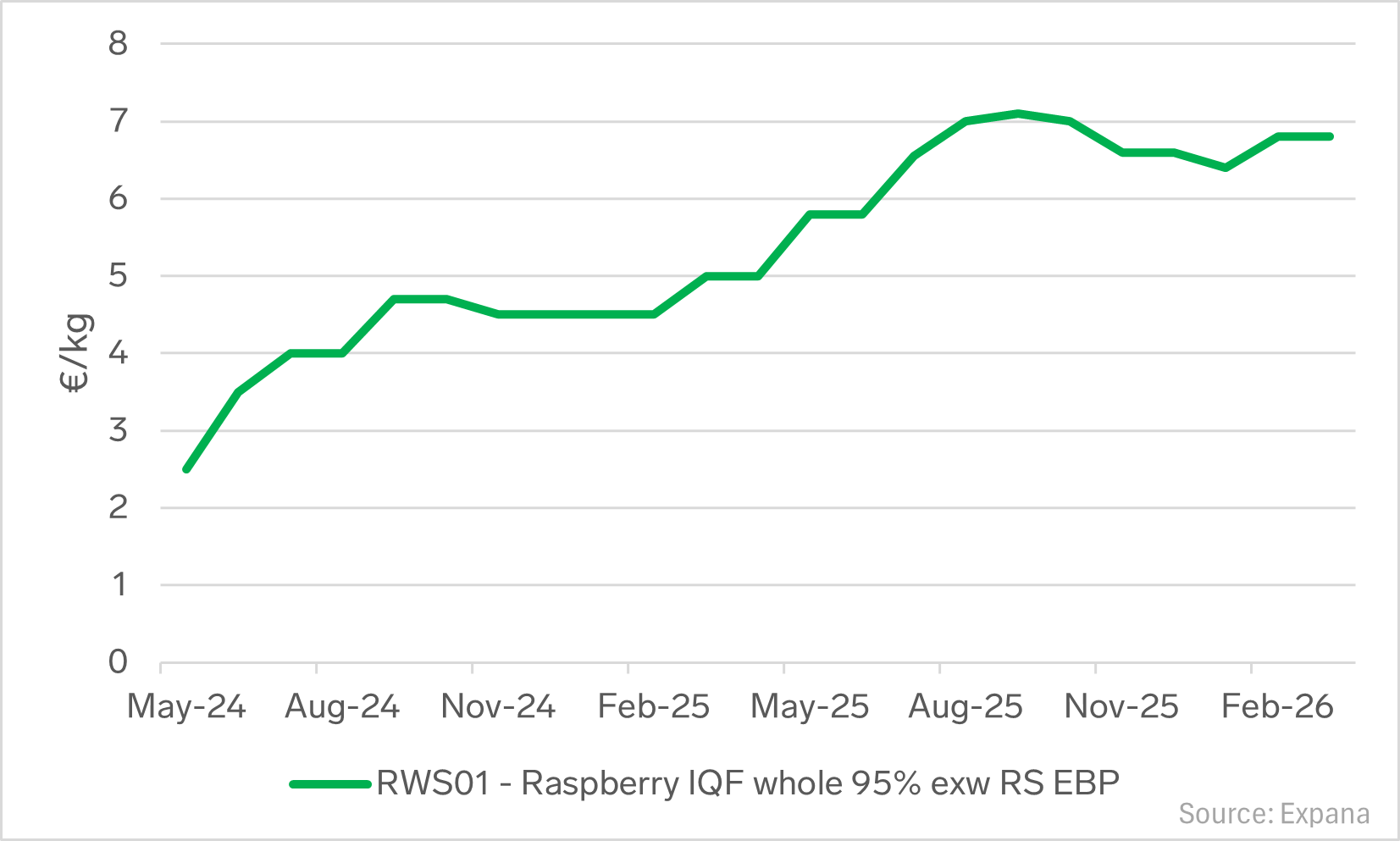
Since June 2025, Serbian prices have remained elevated, with Expana Benchmark Prices (EBP) for Raspberry IQF whole 95% exw Serbia [Expana code: RWS01] at €6.80/kg as of March 31 (latest data), up 36% year-over-year.
With the new season set to begin in June, market participants have expressed cautious optimism. Sources report positive growing conditions for raspberries and blackberries, and some anticipate yields of about 50,000 MT.
However, some state that uncertainty is high. In addition to structural challenges such as climate risks and aging plantations, sources suggest that the effects of the Middle East conflict are exacerbating the difficult operating environment. Disruption to passage through the Strait of Hormuz, a key transit point for about 20% of global oil supply, has led to rising fuel costs, and sources state that they’re facing freight rates about 15% higher than before the start of US and Israeli military action in Iran.
Market players also believe that rising costs generally, stemming from the elevated fuel prices, are having an impact on consumer behavior. Speaking to Expana, sources suggest that consumer demand is down, as households tighten their belts and prioritize essential purchases.
Others, however, have downplayed the impact, suggesting that beyond a reduction to producers’ margins, they don’t anticipate significant adverse effects on the market.
Market participants expect a clearer indication of crop volumes in the coming weeks, noting that, following the low volumes of 2025, this year’s crop “must be better”.
Written by Craig Elliott