

Artificial intelligence (AI) is moving beyond experimentation in the animal nutrition industry, with companies increasingly integrating the technology into manufacturing, scientific research, commercial operations, and customer services. But while some businesses are already deploying AI across multiple functions, others are still establishing the infrastructure, data capabilities, and business cases needed to make it work.
A series of senior executive interviews conducted by Expana at EuroTier 2026 in Hanover, Germany last week, highlighted the different approaches to AI and its potential across the sector and the opportunities companies believe could reshape the way animal nutrition products and services are developed and sold.
Discussions with executives from Cargill Animal Nutrition & Health, Evonik Animal Nutrition, BASF Animal Nutrition, Novus International, EW Nutrition, Orffa, Adisseo, Panavora, Huvepharma, Kemin Animal Nutrition & Health, Trouw Nutrition, ADM Animal Nutrition, CCPA Group, Innovad Group, and Dr. Eckel point to a common direction of travel. While improving internal productivity remains an important driver, the greater ambition is to use AI to anticipate animal performance, improve nutritional decisions and deliver measurable benefits to customers.
The interviews reveal four major developments shaping the industry’s approach: adoption is becoming more established but at different paces depending on who you ask; one of the technology’s greatest potential lies in predictive nutrition; AI is changing the commercial proposition of suppliers; and its ultimate value will be measured through the results achieved by customers. The interviews also highlight some of the limitations in efficient AI usage as seen by the sector today.
AI adoption moving beyond experimentation
For several animal nutrition companies, AI is already becoming part of everyday business operations rather than remaining an experimental technology. However, the extent of implementation varies, with some businesses developing applications across multiple functions while others are still evaluating where investment can deliver the greatest return.
For instance, Cargill Animal Nutrition & Health is among the companies with a longer history of developing the underlying technology. Adriano Marcon, President of Cargill AN&H, said machine learning had been in development at the business for 15 years, although recent advances in AI had substantially expanded its capabilities.
“What is happening with AI today is that its capacity and the solutions are much more powerful than what we have been used to work with, and so we’re busy deploying the power of these new capabilities,” Marcon explained.
Marcon said Cargill AN&H is concentrating its AI investments on three areas: improving customer support via practical applications, such as helping customers and employees obtain faster and more accurate information about deliveries, orders and logistics; making it easier to do business; and strengthening commercial effectiveness.
Evonik is already applying AI to analyze production activities. “We have tens of thousands of sensors which analyze the activities of plants in real time,” said Elmar Rother, AI and Digital Transformation Manager at Evonik Animal Nutrition.
Beyond its own operations, Evonik Animal Nutrition wants to help customers make better use of their information and develop their own AI capabilities. Rother said the challenge was not simply adopting technology to react earlier but connecting data and solutions to improve the customer’s experience and predict developments as accurately and as early as possible.
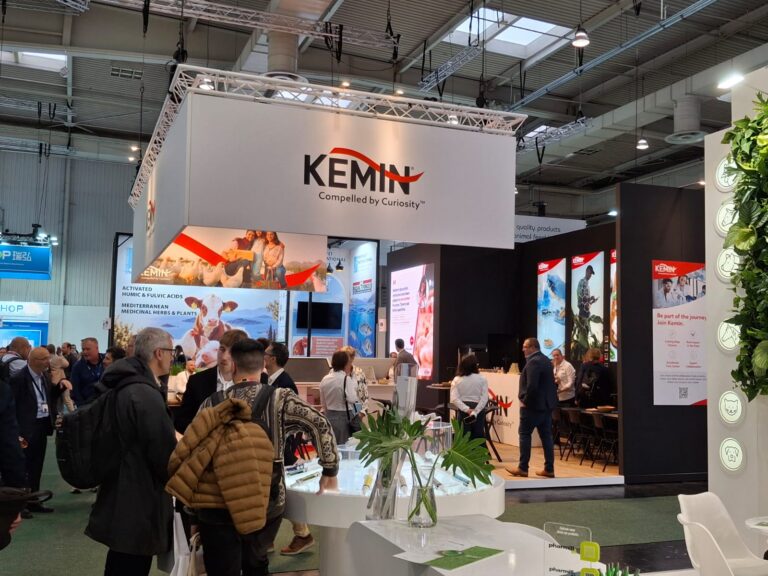
Kemin Animal Nutrition & Health, meanwhile, is deploying AI across scientific research, molecular formulation, customer insights, and demand forecasting. Morné Erasmus, Vice-President Commercial Europe (and incoming President of Kemin AN&H EMENA from January 2027), said the objective was to use data responsibly to help teams address complex scientific and business challenges more quickly.
At Orffa, AI adoption is being approached at three levels: individual productivity, company-wide productivity, and productivity across the industry. Company CEO, Heiko Zuidhoff, said employees have been trained and are embracing the technologies and the company’s AI initiatives. The business also made a significant move in 2026 by consolidating its information into a single data pool, supporting faster decisions, the creation of AI agents and improved dashboards.
Trouw Nutrition is similarly working to integrate AI across its organization. Managing Director ECA, Pieter Bastiaanssen, said all employees had access to AI tools to improve personal productivity and save time. The company is also developing applications to automate specific activities, including formulation, pricing and some research and development work.
Of note, AI has also been given a formal position within the wider Nutreco organization, with a specialist appointed to its board, Bastiaanssen said.
Innovad Group CEO, Ben Letor, said AI was high on the list of priorities for his company’s investors and efforts are underway to translate AI use into tangible benefits for customers as well as internal efficiencies.
The differences illustrate that some companies are already integrating AI into established business processes, while others are still assessing applications and building the foundations for wider deployment.
Moving from operational efficiency to predictive nutrition
Improving internal productivity is an obvious starting point for AI adoption. Automating tasks, improving manufacturing efficiency, accelerating research and development and strengthening forecasting can all deliver relatively immediate benefits. However, the company spokespeople suggested that the greater opportunity lies in applying AI to nutritional science and animal performance, moving from understanding what has happened to predicting what is likely to happen next.
Novus International, for instance, sees this as a central part of its approach. Ed Galo, President of the Specialty Business, identified two main opportunities: improving internal productivity and helping customers make better decisions.
“The real competitive advantage is combining AI with nutritional science to deliver measurable production outcomes,” he said. At Novus, we are already bringing this to life through science-based nutritional solutions, predictive insights into feed ingredient quality, and digital tools that enable better nutrition decisions. AI offers the opportunity to accelerate this approach, moving from understanding animal performance to predicting and optimizing it.”
Kemin Animal Nutrition & Health is pursuing a similar objective by combining AI with sensor data to improve understanding of the factors influencing animal performance.
“The true return of AI is enabling a better decision for better outcomes. In animal nutrition, even the most scientifically proven additive can fail to show its full potential on-farm due to complex confounding variables—microclimate, water quality, or subclinical gut health challenges. The real power of combining AI and sensor data is helping us isolate those confounding factors, predicting performance outcomes before challenges arise,” said Erasmus.
The ability to identify these variables and predict their effects could help nutritionists and producers intervene earlier, rather than reacting only after performance has deteriorated.
For Panavora, the opportunity also extends from internal administrative improvements to applications directly involving animals and farm production. Sergio Schuler, Vice President Animal Nutrition & Health EMEA, identified biomarkers and sustainability tools as areas where AI could contribute to better decisions.
“AI can help our internal processes but more importantly is what can be done on the farm and with animals. We want to improve animal welfare, animal health, and improve precision nutrition,” he commented.
At CCPA Group, CEO, François Pellet, sees AI as a means of identifying performance deviations earlier and translating them into recommendations. He argued that companies should not treat feed efficiency, animal health, forecasting, and economics as separate objectives. Instead, AI should help connect them to provide a more complete understanding of production performance. The company’s ambition is to establish reliable performance baselines, identify deviations, and generate earlier warnings than conventional monitoring methods can provide.
EW Nutrition also sees potential in applying AI directly on farms. The company’s Director of Product Management, Danièle Marzin, identified on-farm diagnostics as the biggest short-term opportunity for animal protein producers, followed by AI-assisted formulation, particularly in ingredient substitution.
She said the ability to make greater use of by-products and locally available raw materials could become increasingly important as climate change, transportation costs, and the desire to reduce dependence on foreign supplies influence raw material choices.
AI will increasingly influence how animal nutrition companies sell their products
The move towards predictive nutrition could also change the way feed additive manufacturers approach their customers, the spokespeople told Expana. Rather than competing primarily on the characteristics and price of individual products, companies increasingly want to combine nutritional solutions, technical expertise, and digital services to address broader production challenges.
Cargill AN&H’s Marcon said his company wants to align commercial discussions on customers’ objectives and how both parties could achieve them together, rather than simply discussing product volumes. “We don’t really talk about how many products they are going to buy from us. We really talk about their own goals and how together we are going to achieve them,” he commented. “We believe that if you have a product alone approach, you’re one, not only very vulnerable to your competition, but two, you have a very limited impact on your customers’ results.”
For Novus, combining AI with nutritional science is similarly intended to strengthen the value of its customer proposition. Predictive insights into feed ingredient quality and digital decision-support tools can help translate scientific knowledge into more practical recommendations, Galo said.
Kemin Animal Nutrition & Health also sees AI as a way of enhancing the relationship between its scientific expertise and customers’ production challenges. However, Erasmus stressed that farming and biology require human judgment, empathy, and practical experience. AI could provide nutritionists with better visibility and richer information, but decisions and customer relationships should remain human responsibilities. “At Kemin, we use AI to amplify human expertise, not replace it. We deploy it across our business: from accelerating scientific research and molecular formulation to refining customer insights and demand forecasting. It’s about using data responsibly to help our teams solve complex scientific and business challenges faster.”
“AI requires large volumes of accurate, real-time data, alongside high-quality scientific knowledge and human expertise to generate relevant recommendations,” also observed CCPA Group’s Pellet.
Innovad Group is also linking its AI ambitions to customer service. Letor said the company’s efforts should be divided equally between improving the service delivered to customers and increasing internal efficiencies.
“We mustn’t fall into the trap of just improving our own efficiency. It needs to be channeled between those two lenses,” he warned.
This distinction is important. AI can make a business more efficient without necessarily changing its competitive position. The greater opportunity comes when the technology improves the value customers receive from their suppliers.
The broader implication is that feed additive manufacturers could increasingly differentiate themselves through the quality of their recommendations and the results they can demonstrate, rather than relying exclusively on individual product characteristics.
The commercial return will ultimately be measured at the customer level
While internal efficiency is an important justification for investment, the interviews suggested that the strongest long-term return from AI will come from helping customers become more productive and profitable.
EW Nutrition’s Marzin was particularly clear about the importance of customer economics. “We believe the best metric is the production cost reductions delivered to the customer.”
She said this could begin with improvements in feed conversion and a reduced need for medication through the development of more resilient animals. Marzin also identified demand forecasting as an area where AI could provide near-term benefits to producers, provided applications were implemented correctly. She referred to McKinsey estimates suggesting AI could reduce forecasting errors by 20% to 50% and inventory by up to 30%.
For Kemin Animal Nutrition & Health’s Erasmus, the value of AI is fundamentally linked to the quality of the decisions it enables. “Internal operational efficiency, like optimizing supply chain forecasting or scientific data processing, is important, but internal efficiency alone won’t differentiate you in the market,” he said.
ADM Animal Nutrition President EMEA, Matthias Vogelsang, also sees AI as an opportunity to connect information across the value chain to improve productivity, robustness, and sustainability. He said data could shorten the time between analysis, understanding and action on farms, particularly in precision nutrition.
Huvepharma is taking a more cautious position. Vice-President Sales and Marketing, Ramon Soriano, said the company was not currently seeing a clear commercial return from AI, although he identified possible benefits in warehousing and purchasing. For now, he sees greater practical application for automation and robotization.
Meanwhile, Dr. Eckel’s future CEO, Viktor Eckel, argued that companies need to define why they want to use AI, establish a desired result, and then assess whether outcomes are better than without the technology.
That caution reflects an important point: the introduction of AI does not necessarily automatically improve performance.
The interviews suggest that animal nutrition is entering a new phase in its adoption of AI. The companies that succeed will not necessarily be those that adopt the most AI applications. They will be those that can translate technology into better decisions and demonstrable improvements for customers.
Animal nutrition’s AI ambitions face a fundamental obstacle: The data gap
Yet despite the industry’s growing enthusiasm for AI, one fundamental obstacle continues to limit its potential: the inability to connect the information that companies already possess.
Data fragmentation emerged as one of the strongest recurring themes in the interviews conducted at EuroTier 2026 last week. The executives argued that businesses are holding substantial quantities of information on raw materials, feed formulations, manufacturing, animal health, farm performance and economics, but are struggling to bring these different sources together.
For them, the problem is not necessarily a lack of data. It is that information remains dispersed across systems, departments, suppliers and customers, often without the consistency or reliability required to turn it into useful intelligence.
They believe this represents a significant structural weakness. AI can analyze information and identify patterns, but its effectiveness ultimately depends on the quality, accessibility and connectivity of the underlying data.
Novus’s Ed Galo, said: “In animal nutrition, we have significant amounts of information on feed formulation, ingredient composition, animal performance, production conditions, and economics. But that information is often fragmented, inconsistent, or difficult to integrate. And that limits our ability to turn data into actionable insights.”
The consequences extend beyond the technical difficulties of implementing AI. Without connecting information from different stages of production, companies struggle to establish the true economic value of their nutritional solutions. Galo explained that assessing a nutritional intervention requires connecting what happens during feed formulation with what happens inside the animal and, ultimately, with the producer’s financial results.
The same problem exists within companies themselves, where commercial information, demand forecasting, manufacturing and supply chain planning can remain disconnected.
“Within companies, similar challenges exist in connecting commercial information, demand forecasting, manufacturing, and supply chain planning. I believe companies that get those fundamentals right will have a significant competitive advantage. Not necessarily because they have the most sophisticated AI tools, but because they can make better decisions with them,” Galo said.
Orffa’s Zuidhoff, offered a similar assessment. “The main gap we see is the limited use of data and the need for it all to be structured and connected. It’s not the amount that matters it’s more how to use it,” he said.
This distinction is particularly important in an industry where companies have spent years collecting scientific, commercial and operational information but have not necessarily developed the infrastructure to combine it effectively.
One of the most significant gaps concerns the connection between nutritional inputs and actual outcomes on farms.
Panavora’s Schuler said: “What’s missing is connecting all of this and bringing the data to the next level. Once we can coordinate precision nutrition with AI will be at the next level,” he said.
Ivo Lansbergen, CEO of Panavora, also identified the missing connection between nutritional products and farm-level results as a particular challenge. He said the industry needed to establish what was happening on farms and connect animal performance all the way back to the feed additives being used.
This would help manufacturers understand the contribution of individual nutritional interventions while providing customers with better evidence of their value.
Kemin Animal Nutrition & Health’s Erasmus described the industry’s difficulty in bringing together information from different stages of production. “The industry rarely suffers from a lack of data—it suffers from disconnected data. Raw material variability at the mill, ration formulation, and actual biological performance on farm usually exist in complete silos with different owners,” he said.
The implications are considerable. Without connecting these datasets, it becomes more difficult to identify the factors responsible for changes in production results.
“Another clear gap across the whole value chain is traceability. Retailers and consumers increasingly demand to know where ingredients originate and what their precise environmental footprint is,” Erasmus also observed.
For an industry facing increasing demands for information about ingredient origins and environmental performance, the ability to connect information throughout the supply chain could become increasingly important.
The data challenge extends beyond farm-level performance and into market intelligence, particularly for feed additives, premixes and individual ingredients.
Dr. Christian Müller, Vice President of Business Management Vitamins and Carotenoids at BASF Animal Nutrition, identified a lack of detailed information on some feed additives and premixes.
“If there is a gap it is with premixes and some feed additives, which is still a black box in some cases,” he said, adding that the classification of different products under common customs codes makes it difficult to obtain a detailed picture of individual product flows and market developments.
Müller also identified a shortage of regional demand data for these products, highlighting the need for greater information availability and understanding.
Adisseo’s Kun Xing, Global Business Director of the Methionine Strategic Business Unit (SBU) also stressed that the reliability of information could not be taken for granted. “The reliability of the data isn’t always there in some cases, so we have to work on it and push for it,” she said.
For companies looking to use AI in procurement, sourcing and supply chain management, unreliable market information can undermine the value of otherwise sophisticated analytical tools.
Data sharing and cost of using AI
Orffa’s Zuidhoff believes wider cooperation when it comes to AI and data could also improve the industry’s understanding of challenges that extend beyond individual companies.
“It’s arguably in the industry’s interest to share. Together we would provide a lot more understanding of issues like antimicrobial resistance, carbon footprint, etc.”
However, greater data sharing raises questions about ownership, commercial confidentiality and trust.
EW Nutrition’s Marzin also highlighted the importance of protecting information as AI adoption accelerates. “We are seeing an explosion of AI usage, some of which is not helpful or is sometimes irresponsible, for instance, customer data protection or corporate data guardrails.”
She said her company takes data protection seriously and warned that the industry was not yet at a point where it could reliably distinguish useful information from the noise.
Finally, Dr. Eckel’s Viktor Eckel warns of another aspect which will inevitably have to be factored in: The cost of using AI itself and the likes of OpenAI or Anthropic pushing prices higher.
“AI usage I suspect will get more expensive. It’s evolving extremely quickly,” he said. “Autonomous agents have many implementations but don’t cost much today. That will surely change surely and be prepared for that.”
Photo Credit: DLG
Written by Simon Duke