
Major feed additive industry players say this year’s Middle East conflict has not forced them to rewrite their playbooks, but it has sharpened habits many were already building: targeted inventories, wider supplier networks, production closer to customers, more open conversations with clients about costs, to name some initiatives.
That is the message from a series of interviews with Expana at EuroTier 2026, which took place in Hanover, Germany, last week. Expana spoke with executives from Cargill Animal Nutrition & Health, Innovad Group, Evonik Animal Nutrition, BASF Animal Nutrition, Novus International, EW Nutrition, Orffa, Adisseo, Panavora, Huvepharma, Kemin Animal Nutrition & Health, Trouw Nutrition, ADM, Phytobiotics, CCPA Group, and Dr. Eckel.
Each was asked the same questions. The conflict has created uncertainty around energy prices, shipping routes, insurance, and the availability and cost of key agricultural inputs, so which of those effects presents the greatest risk to their operations, and how are they preparing for further disruption? Executives were also asked how their approach to geopolitical risk has changed since the start of 2026, and whether they are making different decisions on sourcing, inventory, regional production, distribution and supplier diversification than they did in 2025.
Few named a single threat.
Dr. Christian Müller, Vice President of Business Management for Vitamins and Carotenoids at BASF, said: “There’s not a single risk to pinpoint; it’s an interaction of risks, like transit times and the cost of shipping, raw materials and energy, but we were happy with our supply capabilities.”
Ed Galo, President of the Specialty Business at Novus International, gave a similar answer. The biggest concern, he said, is the combination of uncertainty, volatility, and potential interruptions to global supply chains. Energy costs, freight availability, transit times and the cost of key inputs have all been affected, and the impact can become significant when several of those factors move at once.
Kurt Wegleitner, Managing Director of Phytobiotics, said security of supply for customers is his top priority. “I would not pin the risk on energy prices or insurance alone. What counts is whether transport routes, delivery times and the availability of key raw materials work together. We must manage higher costs and spot interruptions early.”
Others zoomed in on particular issues.
François Pellet, CEO of CCPA Group, said: “For us, it’s not so much about price volatility, it’s more about offsetting the unavailability of some raw materials. Customers want their premix products and were asking if we were indeed receiving our raw materials. So, we want to do more of what we already doing.”
Heiko Zuidhoff, CEO of Orffa, also put continuity first. The volatility of prices has the hardest impact, he said, but the company is managing the price fluctuations. For Zuidhoff, the harder task is serving customers in full and all the time, so Orffa has taken steps to mitigate risk, which he said comes together with the new geopolitical realities.
At Panavora, Sergio Schuler, Vice President of Animal Nutrition & Health for EMEA, named higher costs for feed ingredients, diesel and freight as the company’s biggest concerns. Ivo Lansbergen, CEO of Panavora, also said that his company’s activities in Turkey and the Middle East and Africa (MEA) region are running as normal but at higher cost, and he warned of a wider effect. “Inflation is going up, we’re not seeing that stop, and that’s obviously having an impact on food production and on the consumers’ choice of proteins.”
A recurring theme was that 2026 has not changed the course so much as increased the speed of travel.
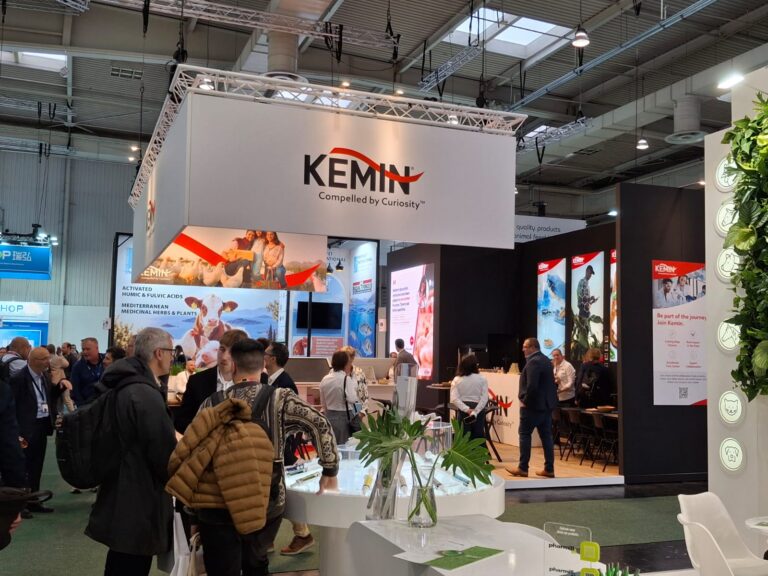
Morné Erasmus, Vice President of Commercial for Europe at Kemin Animal Nutrition & Health (who becomes Kemin ANH EMENA President in January 2027), said: “Our core principles haven’t changed, but our operational pace has accelerated this year. We have deepened long-term strategic contracts for key raw materials and refined our safety stock protocols.”
Matthias Vogelsang, Animal Nutrition President for EMEA at ADM, said the company did not alter its direction at all. “We focus on the outcome, which is reliability of supply. This year, we did not change our direction or course of action thanks to our regionalization focus which was well in place before the Middle East crisis started.”
CCPA Group’s Pellet added: “2026 has not brought a radical change in our strategy. It has accelerated and broadened an approach already underway.” He said disruption has become part of the normal supply-chain environment, so the company’s approach needs to be structural, not temporary.
Several executives placed the conflict in a longer line of shocks.
ADM’s Vogelsang said: “It’s the Middle East this year, but the last decade has been disruptive too; think about the Ukraine war, COVID, etc. We don’t focus on single events, we focus on supply chains, and building optionality and regionalization where it makes business sense.” He added that ADM wants to be structurally ready for tomorrow.
Danièle Marzin, Director of Product Management at EW Nutrition, said: “We did not have to make any special adjustments in 2026; we learned quite a while ago that agility is essential and we built our operational structures accordingly. Energy prices, shipping routes, ingredient availability and costs have been a challenge ever since the start of the conflict between Russian and Ukraine [in 2022], but such pressure on the market is not new.”
She added: “EW Nutrition is more prepared now than it was for previous disruptions like COVID or the shipping crisis a few years ago with Evergreen. The best companies learned to live with challenges and plan for them.”
Viktor Eckel, a member of the management team, and future CEO at Dr. Eckel, said: “I think we’re at a point where disruption is more or less the norm nowadays.” He said Dr. Eckel is constantly preparing for crises and adapting transport routes, as others in the industry do, and that everyone has learned from the past couple of years of crises, so diversification needs to continue.
For Adriano Marcon, President of Cargill Animal Nutrition & Health, experience is itself a defense. “Cargill is 160 years old, has endured wars, and we have strengthened. Risk is not new for us; we’re used to it. And instead of being reactive to the rise of volatility, we are more prepared by design.”
Marcon said the company’s global presence has produced established relationships with suppliers and customers, which give it ready options on supply chain, transportation and where to stock materials.
Pieter Bastiaanssen, Managing Director for ECA (Europe and Central Asia) at Trouw Nutrition, went on to argue that the Middle East crisis has almost had no effect on his company’s regional activities. “Since the Suez Canal blockade a few years back, shipping companies had to adapt and were already doing longer routes. Those higher costs are already factored in today. As for oil and energy price hikes, we’re all getting used to it now,” he said.
Inventory emerged as one of the most cited strategies, though executives differed on to what extent they are to be managed. Naturally, different opinions surfaced based on the types of products provided by the companies.
Cargill’s Marcon said building inventories is important in animal nutrition and in food generally, and that Cargill’s strong financial position lets it deploy more working capital to preserve stock for customers not to experience disruption. “That takes cash,” he said, “but it gives customers peace of mind.”
“Bottom line, we use a lot of risk management, we diversify our supplier network, we expand our ingredient matrix, and we use our financial power if we need to deploy more working capital that translates into inventory. We do all of these things together to make sure our customers have peace of mind, they don’t need to be worried about their supply,” he commented.
Kemin’s Erasmus said: “Over successive global supply chain disruptions, our customers have seen that the Kemin system is built to handle volatility. However, we are very deliberate. Holding excess stock everywhere is neither efficient nor sustainable. We focus our inventory and risk management on the critical, core specialty ingredients that drive the highest value inside our customers’ operations.”
Phytobiotics’ Wegleitner said he also prefers targeted protection of critical items to holding more of everything and has asked for an analysis of average freight costs per destination over the past 12 months to assess logistics options, critical materials and sensible inventory buffers.
CCPA’s Pellet said his firm will pay attention to safety stocks, with inventory levels increasingly adapted to the criticality of each raw material and the availability of substitutes.
Meanwhile, Orffa’s Zuidhoff made the case for proximity. “It’s important to have local physical inventories. Long supply chains are likely going to be a thing of the past.”
Regional production and warehousing came up often as well.
CCPA’s Pellet said the current crisis is “reinforcing our belief to produce locally via our regional hubs to be closer to customers, have shorter lead times and be less exposed to trade barriers.” He acknowledged the price of that approach: “Resilience can come with a cost, but this is what we want to do.”
Novus’ Galo said: “We’ve expanded production beyond our original manufacturing geography, including additional fermentation capabilities in India and finished product capacity both in Taiwan and in the US. This reduces concentration risk and gives us greater flexibility. We’re applying similar thinking to other specialty platforms by developing additional manufacturing partnerships and evaluating opportunities to bring production closer to customers or important raw material sources. Our goal is to have the right inventory, in the right regions, supported by a more flexible supply network.”
“Regionalization is important. We can’t eliminate geopolitical risk, but we can prepare accordingly,” Orffa’s Zuidhoff also opined.
Existing footprints paid off for companies that already had them.
Ben Letor, CEO of Innovad Group, said his company used more buffer stocks than planned at the start of the current crisis but remained resilient thanks to its regional hubs for warehousing and a new mixing facility in Dubai.
Dirk Hoehler, Head of Essential Nutrition at Evonik Animal Nutrition, said his company’s three global methionine hubs gave an advantage, even with the force majeure in Singapore in March, and that the business managed well despite hard work to acquire raw materials. He said lysine production is more regional and well protected, and that specialty products felt only a minor impact.
Ramon Soriano, Vice President of Sales and Marketing at Huvepharma, pointed to the company’s home market. “We are a European company, so we’re not dependent on other regions. We’ve also invested in renewable energy at our plants to be less exposed to higher energy costs and we’re also being more rational with our deliveries because we are definitely seeing longer lead times.”
Kemin’s Erasmus said his company operates more than 20 production facilities worldwide, enabling agility to route production, re-anchor logistics, and buffer key technologies across regions. Likewise, EW Nutrition’s Marzin said her firm’s production and R&D footprint on four continents, and its operational presence on six, are assets.
Alexandre Hervé, Executive Director of Adisseo’s methionine Strategic Business Unit (SBU), said: “We have two strong production platforms, and we recorded no force majeures this year. We served all our customers with no exceptions. We were very agile and active, and not over-promising volumes.”
His colleague, Kun Xing, Global Business Director – Methionine SBU, said: “We also have a strong logistics network enabling flexibility. One of the key successes for us was having good coordination between our teams and platforms in Europe and China. That allows us to anticipate more, and we had to decide on different routes to be able to deliver to customers.”
For Schuler at Panavora, the priority is also continuity. “Business continuity is the priority, so we’re always focused on alternative routes, inventory management, and to be able to ship to partner warehouses as well.”
“We cater to multiple animal species, so we are naturally hedged, geographically too. The proteins we serve are generally aligned with local diets and where these proteins are in demand,” he added.
On sourcing, executives described broader supplier bases and, in some cases, broader ingredient choices.
Galo at Novus said his company continues to diversify manufacturing sources, strengthen relationships with external production partners, and develop more regional supply options where economically justified. He said: “During periods of rapid growth, the immediate priority is often securing enough production capacity to meet demand. That’s necessary, but it isn’t sufficient for the long term. Today, at Novus, we’re placing greater emphasis on resilience, geographic diversification, cost competitiveness, and working capital efficiency.”
Cargill’s Marcon said his firm does not depend on a single supplier or region and exercises its nutritional knowledge to diversify its ingredient matrix.
Letor at Innovad, meanwhile, pointed out that their supply of botanicals provides more cost control and brings the supply chain closer, which fits with the company’s sustainability agenda and its ongoing move away from chemically produced ingredients.
Geopolitical risk is now increasingly integrated into CCPA’s sourcing decisions alongside price, quality and service, and that the company continues to diversify suppliers and geographic origins when relevant, Pellet said. The company’s assessment of strategic suppliers is also broadening to include environmental, social and governance (ESG) risks and life-cycle assessments of products.
Wegleitner at Phytobiotics observed that in purchasing he looks at availability, regulatory requirements, and alternatives, alongside price and quality. He has also introduced a binding information process for changes relevant to customs and foreign trade so that these topics get attention at management level. “We want to see risks earlier and create options before we urgently need them,” he commented.
However, costs, and how to explain them, are a growing part of the job.
Letor said: “You have to be agile and explain the impact of the cost increases suffered. We had to engage to explain the cost element more.” He added: “You organize yourself in the way to prepare for the unknown, being ready for difficult discussions with clients.”
Trouw Nutrition’s Bastiaanssen said his colleagues sit down with customers to offer alternatives, trying to anticipate situations and show where the company can simply add value. On logistics, he said: “You have to think about making logistical investments with the realities of today.”
Klara Eckel, Business Development Lead for Asia, and future Chief Commercial Officer at Dr. Eckel, offered the shortest prescription of the group. Companies, she said, must be “creative, responsive, do multiple scenario planning, and be resilient.”
Across the companies, there is essentially one school of thought and natural convergence with the same aims: reliable delivery to customers, options created before they are needed, and supply chains that sit closer to the markets they serve.
Photo Credit: DLG
Written by Simon Duke