
Lactose prices today
Lactose is produced wherever whey and milk are processed at scale, and Expana’s coverage spans that global footprint: edible-grade benchmarks in the US and EU, trade flow data for the bloc as a whole, and pricing out of the UK, China, France, the Netherlands and the Oceania dairy auction.
Use Expana to track current lactose prices, compare regions, and understand the historical patterns across this essential dairy and pharmaceutical ingredient.
Lactose price chart
| Date | Price (EUR/mt) | MoM % | QoQ % | YoY |
|---|---|---|---|---|
|
Unlock
Unlock our lactose prices and full price history.
|
||||
| 1650 | ↑ 6.5% | ↑ 13.8% | — | |
| 1650 | ↑ 6.5% | ↑ 17.9% | — | |
| 1600 | ↑ 3.2% | ↑ 14.3% | — | |
| 1650 | ↑ 10.0% | ↑ 10.0% | — | |
| 1575 | ↑ 5.0% | ↑ 12.5% | — | |
| 1550 | ↑ 3.3% | ↑ 19.2% | — | |
| 1550 | ↑ 0.3% | ↑ 12.3% | — | |
| 1550 | → 0.0% | ↑ 14.8% | — | |
| 1500 | ↑ 3.4% | ↑ 15.4% | — | |
| 1500 | ↑ 3.4% | ↑ 11.1% | — | |
| 1500 | ↑ 7.1% | ↑ 20.0% | — | |
| 1545 | ↑ 3.0% | ↑ 23.6% | — | |
| 1550 | ↑ 10.7% | ↑ 24.0% | — | |
| 1450 | ↑ 11.5% | ↑ 20.8% | — | |
| 1450 | ↑ 5.1% | ↑ 22.9% | — | |
| 1400 | → 0.0% | ↑ 18.6% | — | |
| 1500 | ↑ 11.1% | ↑ 20.0% | — | |
| 1400 | ↑ 7.7% | ↑ 17.2% | — | |
| 1300 | ↓ 3.7% | ↑ 8.8% | — | |
| 1380 | ↑ 10.4% | ↑ 15.0% | — | |
| 1400 | ↑ 12.0% | ↑ 16.7% | — | |
| 1350 | ↑ 8.0% | ↑ 12.5% | — | |
| 1300 | ↑ 8.3% | ↑ 15.6% | — | |
| 1350 | ↑ 14.4% | ↑ 18.9% | — | |
| 1250 | → 0.0% | ↑ 9.6% | — | |
| 1250 | ↑ 4.6% | — | — | |
| 1200 | ↑ 0.4% | — | — | |
| 1180 | ↓ 1.7% | — | — | |
| 1180 | ↓ 1.7% | — | — | |
| 1250 | ↑ 4.2% | — | — | |
| 1195 | ↑ 6.2% | — | — | |
| 1195 | ↑ 5.3% | — | — | |
| 1200 | ↑ 5.7% | — | — | |
| 1200 | ↑ 5.3% | — | — | |
| 1200 | — | — | — | |
| 1125 | — | — | — | |
| 1135 | — | — | — | |
| 1135 | — | — | — | |
| 1140 | — | — | — | |
Expana: the independent source for lactose pricing and market intelligence
Expana provides independent lactose price assessments produced by specialist reporters, grounded in market indications rather than modelled from second-hand data. Our coverage spans the US, EU, UK, China, France and the Netherlands, alongside Oceania auction pricing.
Lactose coverage is led by Jose Saiz, Market Reporter, Dairy. Explore related coverage on our dairy, whey prices and milk powder prices pages.
104 lactose data series worldwide
Price, import, export and production data across the US, EU, UK, China, France and the Netherlands.
Edible-grade benchmarks
100 mesh edible-grade lactose tracked FCA US and EXW EU, the standard commercial specification.
EU trade flow tracking
Monthly EU import and export volumes, alongside national export pricing for France and the Netherlands.
Oceania auction pricing
Dairy auction pricing from New Zealand and Australian ports.
Price history and trend data
Price history with month-on-month, quarter-on-quarter and year-on-year change.
Market commentary
Analysis explaining what is moving lactose prices.
Our lactose intelligence includes:
What drives lactose prices
Lactose prices move with whey and milk powder production, since lactose is extracted from both, alongside demand from infant formula, pharmaceutical and food manufacturing sectors.
- Milk supply and its seasonal pattern, which determines whey and lactose output.
- Cheese and whey powder production volumes in the US and EU.
- Demand from infant formula manufacturers, a major end market for edible-grade lactose.
- Pharmaceutical-sector demand for high-purity lactose.
- Export flows between the EU, US and importing regions such as China.
- Currency movements between the US dollar, euro and pound.
Expana’s market commentary explains which of these drivers is behind each price move.

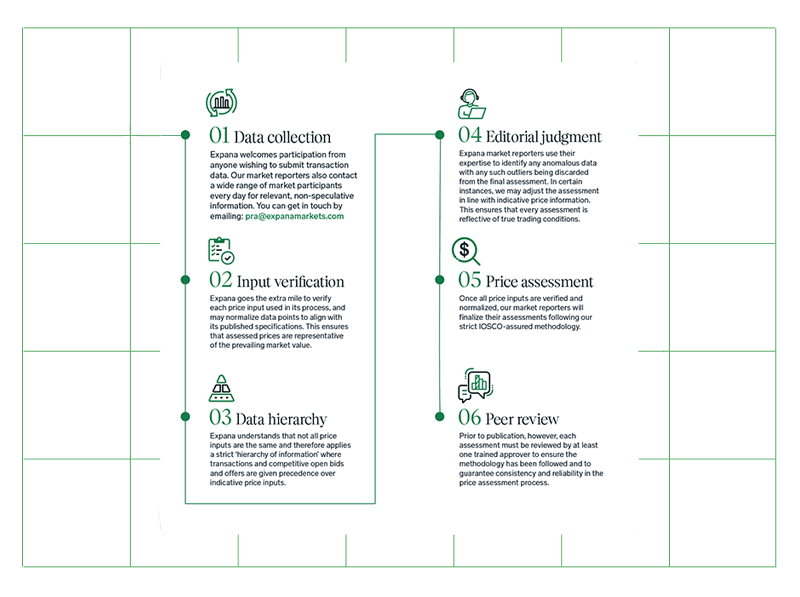
Our lactose price assessment methodology
Expana’s lactose prices are produced by specialist reporters following a published, consistent methodology, so the data you benchmark against is transparent, independent and comparable over time.
- Market price basis
The 100 mesh edible grade refers to particle size and purity, the standard specification used across food and pharmaceutical applications. - Specialist reporting
Reporters collect and cross-check market information before each assessment is published. - Consistent price history
Assessments follow the same basis over time, so current prices can be compared with historical levels.
This approach gives buyers, processors and traders a reliable reference point for negotiations, budgeting and contract timing.
Looking for full insights on the lactose market? Get a demo today.
Latest lactose news and insights
Analysis created and curated by our dairy experts.





























Lactose Market FAQs
What drives lactose prices?
Lactose prices move with milk supply and whey production, since lactose is a by-product of both, alongside demand from infant formula and pharmaceutical manufacturers who require high-purity grades. Seasonal shifts in milk output feed through directly.
What does 100 mesh edible grade mean?
This describes lactose’s particle size (100 mesh) and purity level (edible grade, at least 99% lactose), the standard specification used across food manufacturing and reflected in Expana’s main US and EU benchmarks.
What lactose data does Expana cover?
Expana covers edible-grade price benchmarks in the US and EU, monthly EU import and export trade flows, national export pricing for France and the Netherlands, and Oceania auction pricing from New Zealand and Australia.
Why track EU lactose trade flows alongside prices?
Import and export volumes show where EU lactose is actually moving, which helps explain price movements that trade data alone, without volume context, would leave unclear.
Is pharmaceutical-grade lactose different from food-grade?
Pharmaceutical-grade lactose typically requires higher purity and tighter specifications than food-grade, and can command a different price, though Expana’s benchmarks focus on the widely traded edible-grade specification.




Essential intelligence for industry professionals
Expana delivers essential intelligence to industry professionals across dairy markets, ensuring business leaders stay informed about the latest prices and industry trends, enabling them to effectively navigate disruptions, manage prices, and deliver value to their customers.