
Walnut prices today
California dominates global walnut supply, and Expana’s coverage reflects that: a detailed grid of Chandler and non-Chandler varieties by half-kernel percentage, alongside benchmarks from Eastern Europe, China, France, Hungary, India and Italy.
Use Expana to track current walnut prices, compare varieties and origins, and understand the historical patterns across this global tree nut.
Walnut price chart
| Date | Price (USD/lb) | MoM % | QoQ % | YoY |
|---|---|---|---|---|
|
Unlock
Unlock our walnut prices and full price history.
|
||||
| 2.7 | → 0.0% | ↓ 1.8% | — | |
| 2.7 | → 0.0% | → 0.0% | — | |
| 2.7 | ↓ 1.8% | ↓ 5.3% | — | |
| 2.75 | ↑ 1.9% | ↓ 1.8% | — | |
| 2.7 | ↓ 5.3% | ↓ 14.3% | — | |
| 2.85 | ↑ 1.8% | — | — | |
| 2.8 | ↓ 11.1% | — | — | |
| 3.15 | — | — | — | |
Expana: the independent source for walnut pricing and market intelligence
Expana provides independent walnut price assessments produced by specialist reporters, grounded in market indications rather than modelled from second-hand data. Our coverage spans the US, Eastern Europe, China, France, Hungary, India and Italy, across multiple varieties and grades.
Walnut coverage is led by Nick Moss, Market Reporter, Nuts. Explore related coverage on our nut prices, almond prices and pistachio prices pages.
50 walnut benchmarks worldwide
Kernel and in-shell pricing across the US, Eastern Europe, China, France, Hungary, India and Italy.
Variety-specific coverage
Chandler and non-Chandler US varieties tracked separately, reflecting their different market values.
Half-kernel grade grid
US benchmarks spanning 20%, 40%, 60% and 80% half-kernel content.
Delivered and FAS pricing
FAS US origin pricing alongside CFR UK delivered benchmarks.
Price history and trend data
Price history with month-on-month, quarter-on-quarter and year-on-year change.
Market commentary
Analysis explaining what is moving walnut prices.
Our walnut intelligence includes:
What drives walnut prices
Walnut prices move with Californian harvest size, which dominates global supply, alongside demand from Europe and Asia and the quality grade mix each season produces.
- Californian walnut harvest size and quality, the world’s largest supply source.
- Weather during the growing season, particularly late frosts and summer heat.
- The proportion of light-colour, high-half-kernel-content fruit each harvest yields.
- Export demand from Europe and Asia for shelled kernels.
- Competing supply from Eastern Europe, China and Chile.
- Currency movements affecting US export competitiveness.
Expana’s market commentary explains which of these drivers is behind each price move.
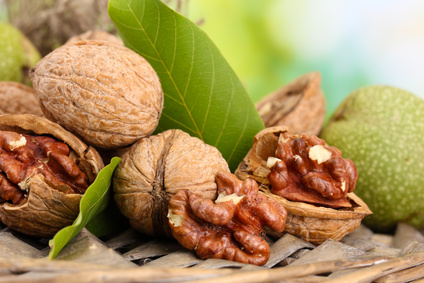
Our walnut price assessment methodology
Expana’s walnut prices are produced by specialist reporters following a published, consistent methodology, so the data you benchmark against is transparent, independent and comparable over time.
- Market price basis
US benchmarks are defined by variety (Chandler or non-Chandler), colour and half-kernel percentage, the industry’s standard grading system for shelled walnuts. - Specialist reporting
Reporters collect and cross-check market information before each assessment is published. - Consistent price history
Assessments follow the same basis over time, so current prices can be compared with historical levels.
This approach gives buyers, processors and traders a reliable reference point for negotiations, budgeting and contract timing.

Looking for full insights on the walnut market? Get a demo today.
Latest walnut news and insights
Analysis created and curated by our nuts dried fruit experts.








Walnut Market FAQs
What drives walnut prices?
Walnut prices are set mainly by the size and quality of the Californian harvest, which supplies most of the world’s walnuts, along with demand from Europe and Asia. A weak or late harvest can tighten supply for the whole season.
What does Chandler variety mean for walnut prices?
Chandler is a premium Californian walnut variety valued for its light colour and high half-kernel yield, and typically commands a higher price than non-Chandler varieties in Expana’s benchmarks.
What does half-kernel percentage mean?
Half-kernel percentage measures what share of the shelled walnuts come out as intact halves rather than broken pieces. Higher percentages, such as 80%, are a premium grade valued by retailers for appearance.
What walnut origins does Expana cover?
Expana covers the US across multiple varieties and grades, alongside benchmarks for Eastern Europe, China, France, Hungary, India and Italy.
Why track both FAS and delivered walnut prices?
FAS (free alongside ship) prices show the US export price before freight, while delivered prices into the UK show the landed cost buyers pay, including shipping. Comparing both highlights how much freight adds to the final cost.



Essential intelligence for industry professionals
Expana delivers essential intelligence to industry professionals across nuts markets, ensuring business leaders stay informed about the latest prices and industry trends, enabling them to effectively navigate disruptions, manage prices, and deliver value to their customers.